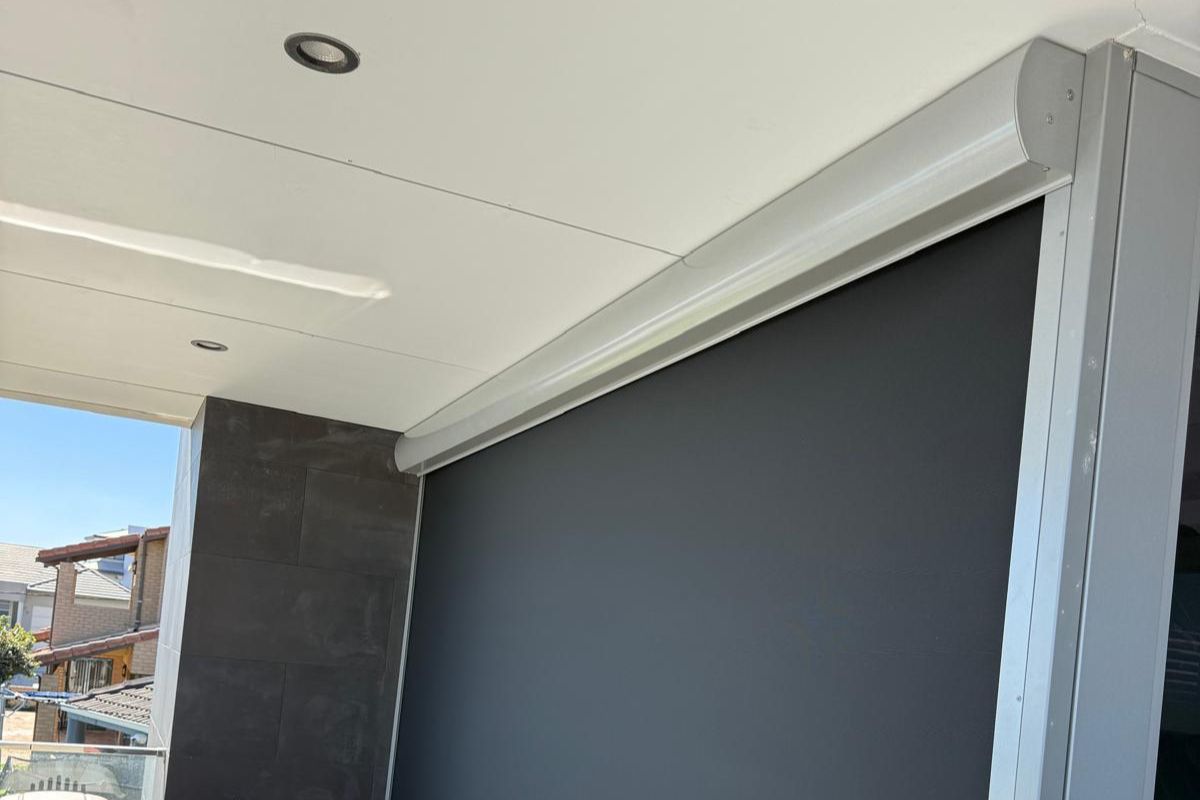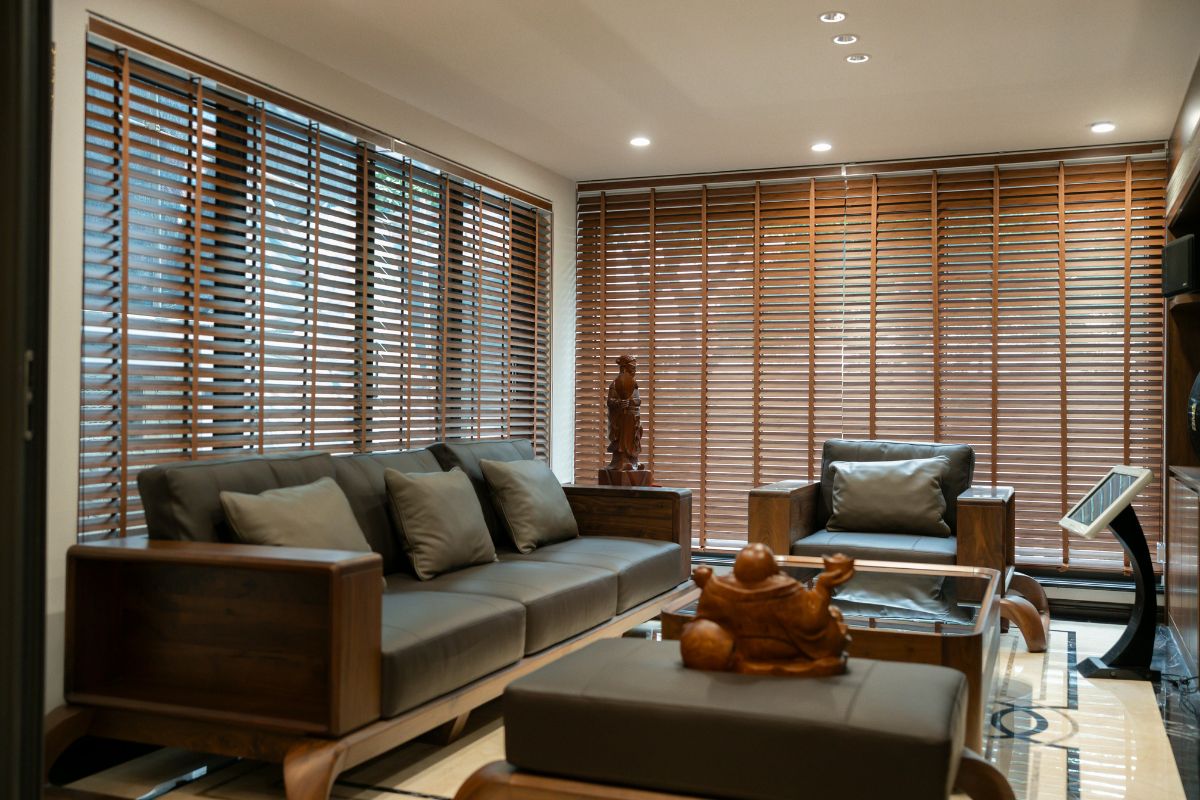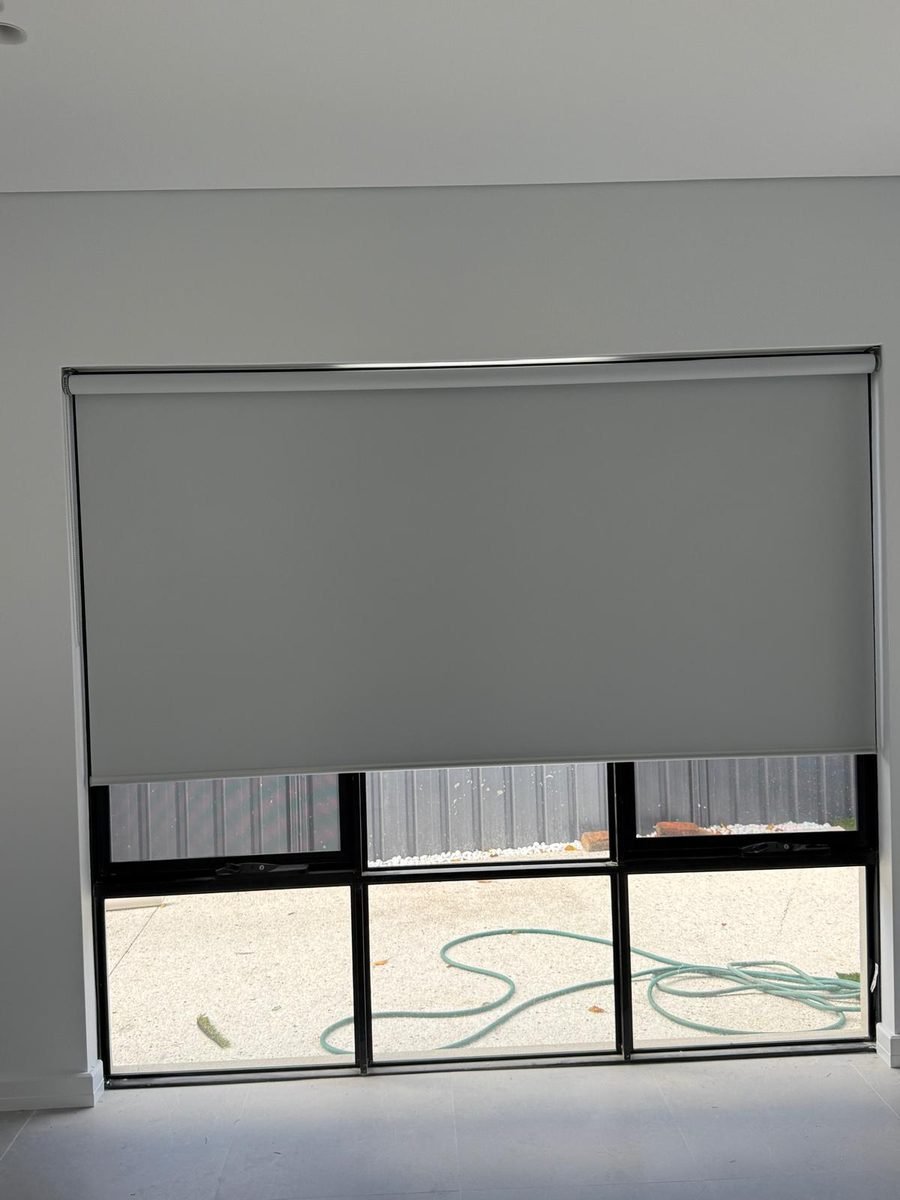
Motorised blinds for hard to reach windows in Perth solve a problem that most homeowners quietly put up with for years. It is the tall window above the staircase in a Subiaco character home, the high louvre in a double storey void in Ellenbrook, or the wide window over a bath in a Fremantle renovation where the only way to reach the chain is to climb onto something you should not climb onto. The blind stays half open, the sun pours in all afternoon, and nobody bothers adjusting it because getting to it is a job in itself.
We hear the same story across Perth, from new builds in Alkimos and Baldivis to older brick homes in Mount Lawley and Nedlands. A beautiful high window was drawn into the plan for light and height, and nobody thought about how the blind would be operated once the furniture was in. In a Perth summer that oversight hurts. The afternoon sun sits low and hot on west facing glass, the Fremantle Doctor sea breeze arrives just when you want the blind down to cut the glare, and a blind you cannot reach cannot do either job.
Motorisation changes that daily habit completely. One button, one tap in an app, or one timed setting closes every hard to reach blind at once. This guide works through the windows that benefit most, how the motors and power options actually work, which products suit each awkward spot, and the fitting details that matter in Perth homes, from hot dry summers and winter storm fronts to salt air in coastal suburbs like Cottesloe, Scarborough and Hillarys.
In This Guide
- What Counts as a Hard to Reach Window
- Why Manual Blinds Fail on High Windows
- How Motorised Blinds Actually Work
- Motorised Roller Blinds: The Workhorse for High Windows
- Motorised Shutters, Sheers and Other Options for Awkward Spots
- Power, Charging and What Happens in a Blackout
- Measuring, Fitting and Getting a Quote That Covers the Hard Parts
- Frequently Asked Questions
1. What Counts as a Hard to Reach Window
A hard to reach window is any window you cannot operate safely with both feet on the floor. That sounds simple, but it covers more of a Perth home than most people expect. Tall windows above staircases are the classic example, because the floor drops away beside you and a ladder has nowhere safe to sit. Windows in double storey voids are the same story, only higher. Skylights need a pole or a ladder every time, and windows behind a bath, a bench or a bed head are just as awkward, even when they are not especially high.
Wide windows can be hard to reach in a different way. A three metre roller blind on a living room wall in Applecross might sit at a normal height, but the chain sits at one end and the blind is heavy to pull across its full width. Motorisation is not about luxury in these rooms. It is about making the blind usable at all.
- Stairwell and void windows where a ladder cannot sit safely on a level floor.
- Skylights and roof windows that need a pole or a ladder for every adjustment.
- Windows behind baths, benches, beds and tall furniture that block a normal reach.
2. Why Manual Blinds Fail on High Windows
Manual blinds on high windows fail for three practical reasons, and the first is safety. A chain that hangs down from a high blind is often out of reach, so someone stands on a chair, a bench or the edge of the bath to grab it. That is how falls happen in the home, and it is a risk no window covering is worth. Even a chain reachable from the floor can be a problem in a house with small children or pets, because a long loop of cord near a stairwell is exactly the kind of hazard that should not be there.
The second reason is wear. A long chain on a tall blind gets pulled at an angle, over and over, and the mechanism wears faster than it would on a normal window. A heavy wide blind is worse, because the pull needed to lift it is greater and the fabric can bunch when the pull is uneven. The third reason is the simplest: people stop using the blind. A blind that is a hassle to operate stays where it was left, which means the room is either too bright in the afternoon or too dark on a grey winter morning, and the blind is not earning its keep.
- Ladders and chairs near stairs and baths turn a simple adjustment into a fall risk.
- Long chains and heavy pulls wear mechanisms faster and can make fabric track unevenly.
3. How Motorised Blinds Actually Work
A motorised blind is an ordinary blind with a small quiet motor tucked inside the roller tube or the headrail. You control it with a handheld remote, a wall switch, an app on your phone, or a voice command through a smart home system. Most systems let you set favourite positions too, so one button can drop the west facing blinds for the afternoon sun, while another button opens everything in the morning. Group control is the part owners love most on hard to reach windows, because one remote can drive every blind in a void or a stairwell at once.
Timers and sun sensors take the daily habit out of your hands completely. A timer can close the high blinds before the worst of the afternoon heat arrives, and open them again in the evening when the Fremantle Doctor has cooled the house. A sun sensor does the same job by reacting to light levels rather than the clock.
- Remote control for single blinds, group control for every blind in a room or a void at once.
- App and voice control for blinds you want to adjust from the couch, the kitchen or away from home.
4. Motorised Roller Blinds: The Workhorse for High Windows
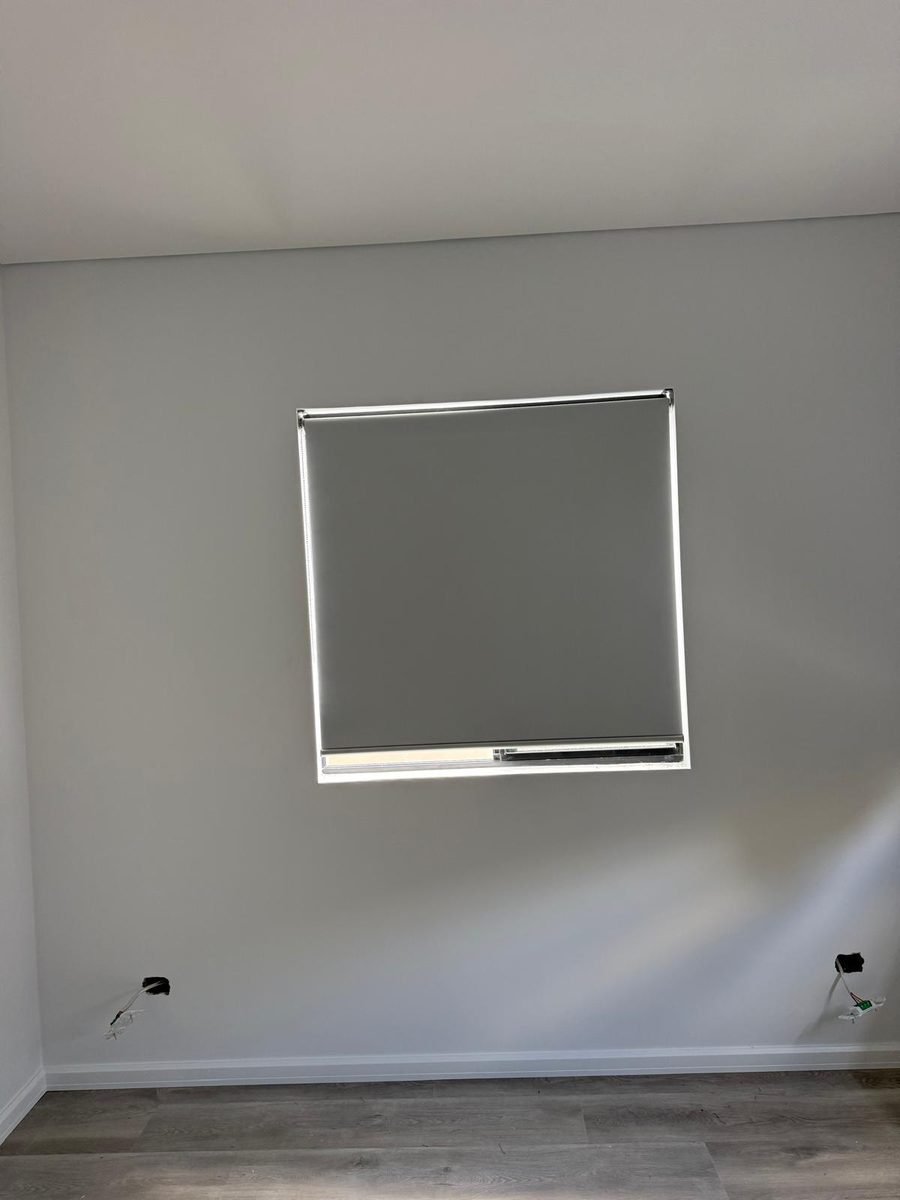
Roller blinds are the most common motorised choice for hard to reach windows in Perth, and for good reason. The motor sits neatly inside the tube, the fabric rolls cleanly up and down, and the same blind that suits a normal window scales up well to tall and wide glass. A sunscreen fabric keeps the view and cuts glare during the day, a light filtering fabric softens the light and gives daytime privacy, and a blockout fabric gives full darkness and the best heat control on a west facing window. On a high window, blockout often makes the biggest difference in a Perth summer, because it stops the late sun from heating the room long after sunset.
Motorised rollers also suit the rooms where manual rollers struggle most. A wide roller over a living room window in City Beach or a tall roller in a double storey void in Baldivis can be heavy to lift by hand, but a motor lifts the same weight smoothly every time. That smooth lift matters for the life of the blind, because fabric that rolls evenly stays tidy longer. If you already have roller blinds on your normal windows, motorising the high ones keeps the whole house consistent.
- Best for: tall windows, void spaces, stairwells, wide living room glass and skylight style openings.
- Choose sunscreen for view and glare, light filtering for soft daylight, blockout for heat and darkness.
5. Motorised Shutters, Sheers and Other Options for Awkward Spots
Roller blinds are not the only answer, and the right choice depends on the room. Plantation shutters can be motorised on some systems, and they suit high windows where you want the classic shutter look with louvres you can tilt for light without opening the whole panel. They are a heavier option and they cost more, so they tend to suit feature windows in living areas and front rooms in suburbs like Mount Lawley and Fremantle, where the shutter is part of the look of the house.
Sheer curtains on a motorised track are the soft option for high living room glass. A full width sheer drifts gently when the afternoon sea breeze comes through, filters harsh Perth light into a warm glow, and gives daytime privacy without shutting the room down. A motorised track means the sheer opens and closes evenly across a wide span, which matters when the track sits above a stairwell or a void. For a bedroom high window, a dual roller blind gives a daytime layer plus a blockout layer, each on its own motor, so night privacy and morning light are both one button away.
- Motorised shutters suit feature windows where the look matters as much as the light control.
- Motorised sheer tracks suit wide living room glass and rooms that benefit from soft filtered light.
6. Power, Charging and What Happens in a Blackout
Most motorised blinds for hard to reach windows in Perth run on a rechargeable battery motor, and that is usually the best fit. There is no electrician needed for a new power point, no cable running down the wall, and the battery typically lasts several months between charges with normal daily use. Charging is usually done with a plug in charger held up to the motor, or with a solar panel charger that sits on the glass and tops the battery up from daylight. A solar charger suits a high sunny window beautifully, because the very sun that makes the blind necessary also keeps its battery charged.
Mains powered motors suit new builds and major renovations, where a power point can be planned above the window before the plaster goes on. They never need charging, which suits a very tall window that would be awkward to reach even with a charger. Battery blinds keep working during a power cut, because the battery is in the blind itself, which is reassuring during a winter storm front when the power can drop out across a suburb. Mains blinds stop during a blackout unless they have a battery backup, so ask about that before you choose mains power for a bedroom or a stairwell blind you may need at night.
- Battery motors suit most existing homes: no new power point, no visible cable, months between charges.
- Solar chargers suit sunny high windows, because daylight keeps the battery topped up.
7. Measuring, Fitting and Getting a Quote That Covers the Hard Parts
Measuring a hard to reach window is not a job for guesswork, and it is one area where a professional measure pays for itself. The installer needs the exact width and drop, the depth of the reveal, the space above the window for the motor and the bracket, and the distance to the nearest obstacle, whether that is a stair rail, a light fitting or a ceiling fan. On a stairwell window, the installer also needs to know how they will reach the window safely on the day, because safe access gear is part of the job, not an afterthought.
Perth conditions add a final checklist. Near the coast, from Cottesloe to Scarborough and down to Rockingham, salt air works slowly on metal parts, so corrosion resistant hardware and a wipe down now and then will keep a motorised blind working well for years longer. In summer, a west facing high window needs a fabric and a timer setting that handle late heat, not just morning glare. With no chain or cord, a motorised blind is the safest option for homes with children and pets, which matters most on stairwell windows. For cost detail, see our motorised blinds cost guide, and for a measure that covers access properly, contact us for a free measure and quote.
- Measure width, drop, reveal depth and clearance above the window, plus access for safe fitting.
- Coastal homes: choose corrosion resistant hardware and wipe tracks and rails regularly.
Frequently Asked Questions
Q. Can motorised blinds be fitted to windows I already have?
In most cases, yes. A motorised roller blind can be fitted to an existing window as long as there is enough depth and clearance above it for the motor tube and bracket. The installer will check the reveal and the space for safe access, and will tell you honestly if a different product or mount will work better. Very shallow reveals sometimes need a face fit mount outside the reveal instead.
Q. Do motorised blinds still work during a power cut?
Battery powered blinds do, because the battery sits inside the blind itself and does not rely on mains power. That is one reason battery motors are popular for stairwell and bedroom windows in Perth, where a winter storm front can take the power out. Mains powered blinds stop during a blackout unless they have a battery backup.
Q. How often do I need to charge a battery motorised blind?
Typically every few months with normal daily use, but it depends on the size of the blind, the weight of the fabric and how many times a day it moves. A large blockout blind that moves twice a day will need charging more often than a small sheer that moves once. A solar charger on a sunny window can stretch the time between charges, because it tops the battery up from daylight.
Q. Are motorised blinds safer for children and pets?
Yes, because there is no chain or cord loop to reach, pull or tangle. That matters most on stairwell and void windows, where a dangling cord would sit right where children play and climb. Motorised control also means nobody needs to stand on furniture to reach a high blind.
Q. Can one remote control several hard to reach blinds at once?
Yes, and that is the feature most owners use every day. A multi channel remote can drive each blind on its own, or group them so one button moves every blind in a void, a stairwell or a whole living area together. You can also set favourite positions, so one button drops the west facing blinds to the same spot each afternoon.