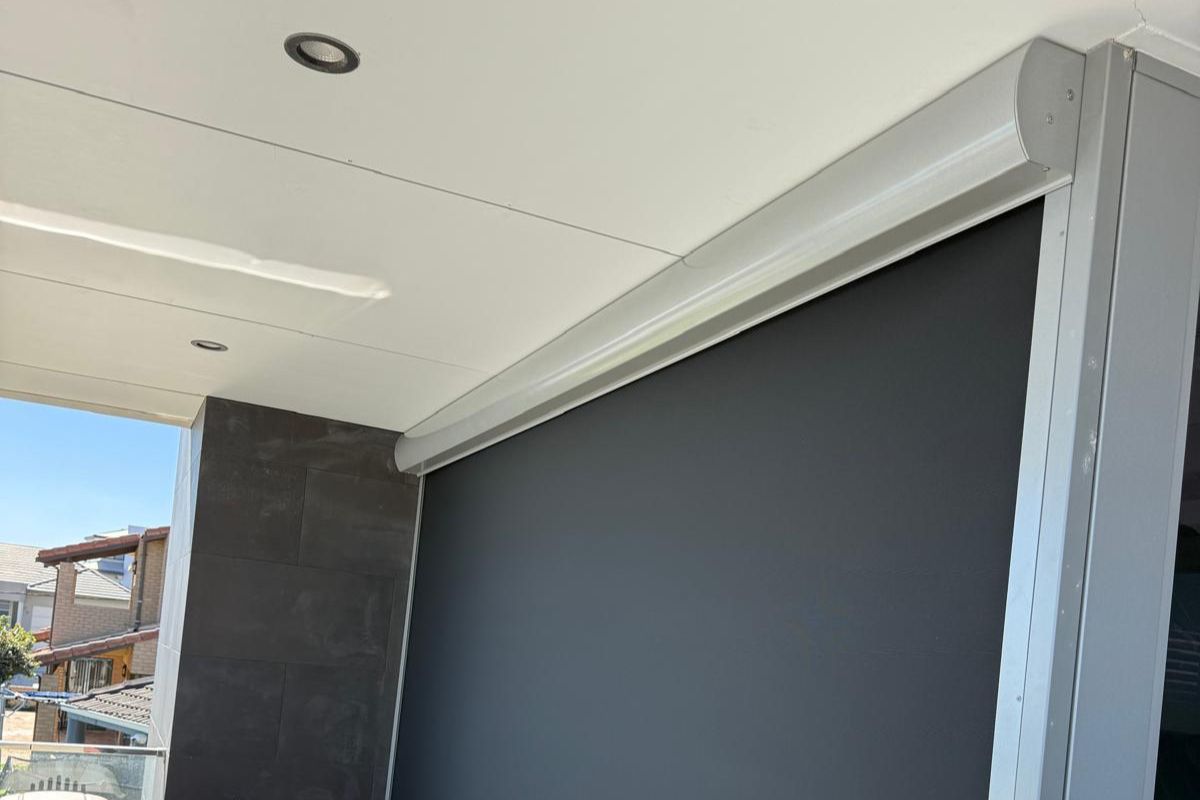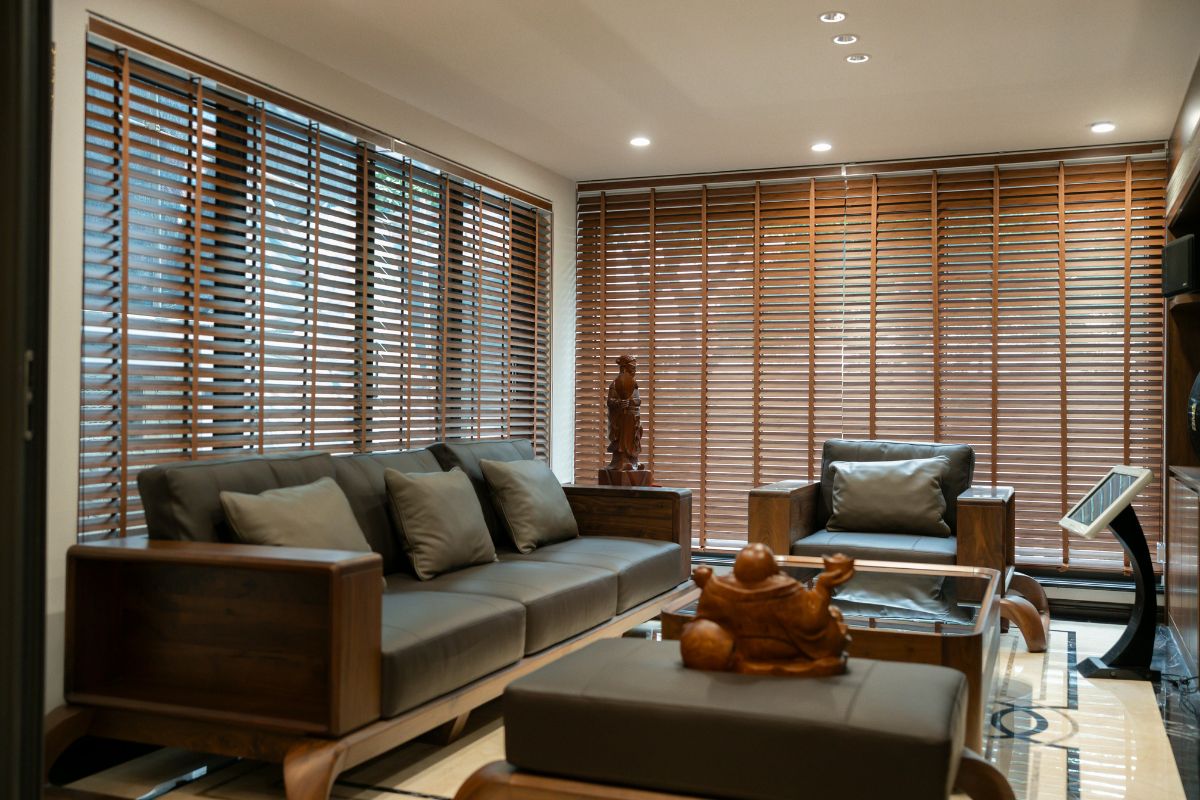
Blinds for sliding doors in Perth need to do more than look good in a photo. That door is usually the biggest sheet of glass in the house. It is the way out to the alfresco, the path the kids and the dog use all day, and the spot where the afternoon sun pours in during a long hot summer. Pick the wrong covering and you will fight it every single day. Pick the right one and you barely notice it is there, which is exactly the point.
We see the same story across Perth, from new builds in Alkimos and Baldivis to older brick homes in Mount Lawley and Fremantle. A homeowner buys a standard blind sized for a normal window, fits it over a sliding door, and then discovers the problems one by one. The blind catches on the door handle. It blocks the doorway when it is down. It leaves a gap at the side where neighbours can see straight in at night. Or it simply cannot cope with a door that is three or four metres wide.
This guide works through the options that actually suit sliding doors in Perth homes, in plain language. We compare panel glide blinds, roller blinds, dual roller blinds, sheer curtains and vertical blinds, and we cover the details that matter here: hot dry summers, the afternoon Fremantle Doctor sea breeze, winter storm fronts, and salt air in coastal suburbs like Cottesloe, Scarborough and Hillarys. By the end you will know which option fits your door, your room and the way your family lives.
In This Guide
- Why Sliding Doors Need a Different Approach
- Panel Glide Blinds: The Classic Sliding Door Answer
- Roller Blinds: Simple, Clean and Perth Proof
- Dual Roller Blinds: Day Privacy Plus Night Blockout
- Sheer Curtains: Soft Light for Living Areas
- Vertical Blinds and What to Watch Out For
- Measuring, Fitting and Getting the Details Right
- Frequently Asked Questions
1. Why Sliding Doors Need a Different Approach
A normal window stays shut most of the time. A sliding door does not. It opens and closes dozens of times a day, often with hands full of food, towels or school bags. Any blind on that door has to move out of the way cleanly, stay clear of the handle, and go back into place without a wrestling match. If it cannot do that, it will spend most of its life pushed to one side, which defeats the purpose of fitting it at all.
Width is the other problem. Sliding doors in Perth are commonly 2.1 metres wide, and three and four metre stacker doors are now common in new homes in Ellenbrook, Byford and the northern suburbs. A single roller blind that wide can bow, sag or become heavy to lift. That is why wide doors often need either two blinds side by side, a panel system designed for wide spans, or a track system that shares the load properly. A good installer will measure the full span, check the space above the door, and tell you honestly where one blind ends and two begin.
- Clearance matters most: the blind must clear the door handle and the sliding track every time it moves.
- Stack space matters too: when the blind is open, it needs somewhere to sit without blocking the doorway or the view.
- Privacy flips at night: glass that looks dark from inside during the day becomes see through from outside once the lights go on.
2. Panel Glide Blinds: The Classic Sliding Door Answer
If you ask us for one product built for sliding doors, panel glide blinds are usually the first name we mention. They are wide flat panels of fabric that slide along a track, just like the door itself. You pull them across to cover the glass, then slide them back to stack neatly to one side. Because the panels move sideways rather than up and down, they never block the door handle and they never get in the way of someone walking through.
Panel glides suit the widest doors best. A four panel system can cover a stacker door that would defeat a single roller blind, and each panel stays flat and tidy. You can choose light filtering fabric for living areas, where you want daylight without glare, or blockout fabric for bedrooms and media rooms, where darkness matters. Many Perth families pair a light filtering panel with a blockout panel on the same track, so they can change the room from bright to dark without fitting two separate systems.
- Best for: wide sliding and stacker doors, living rooms, and open plan spaces.
- Choose light filtering fabric for daytime living, blockout fabric for bedrooms and media rooms.
- Ask about stack width before you order, so the open panels do not block the walkway.
3. Roller Blinds: Simple, Clean and Perth Proof
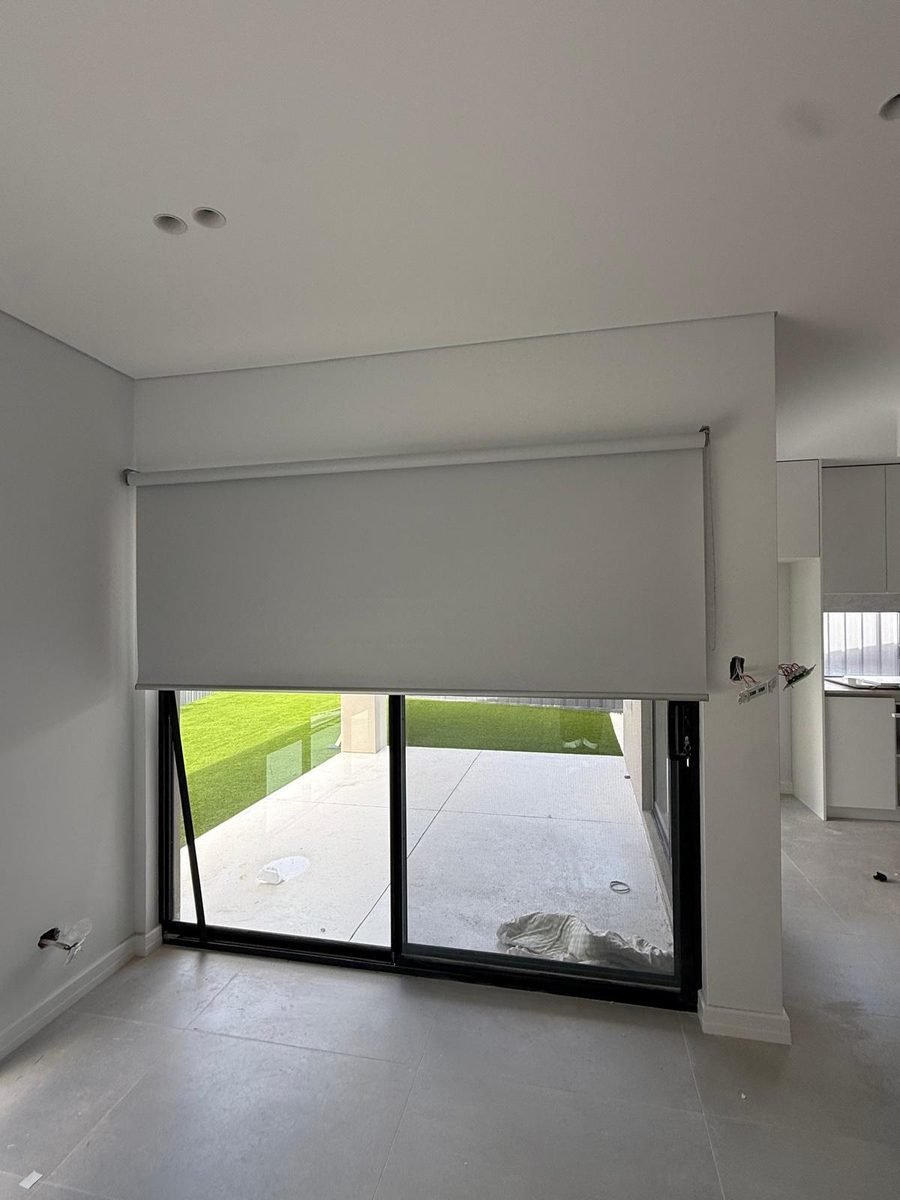
Roller blinds are the simplest option for a sliding door, and sometimes simple wins. A single clean sheet of fabric rolls up out of sight when you want the view, and rolls down when you want shade or privacy. They suit modern Perth homes beautifully, they are easy to wipe clean, and they cost less than most track systems. For a standard two panel sliding door, a well fitted roller blind is hard to beat for everyday value.
Fabric choice is where a roller blind succeeds or fails on a sliding door. A sunscreen fabric lets you keep the view and cuts glare during the day, but it will not give you full privacy at night. A light filtering fabric softens the light and gives daytime privacy while still letting the room feel bright. A blockout fabric gives complete privacy and the best heat control, which matters on a west facing door in a Perth summer. Start with the problem that bothers you most: heat, or neighbours seeing in.
- Best for: standard two panel sliding doors, rentals, and budgets that need to stay sensible.
- Sunscreen fabric keeps the view but not night privacy; light filtering and blockout fabrics fix that trade off.
- On doors wider than about 2.4 metres, ask whether two blinds will work better than one.
4. Dual Roller Blinds: Day Privacy Plus Night Blockout
Dual roller blinds put two roller blinds on one bracket: usually a sunscreen or light filtering blind at the front and a blockout blind behind it. For a sliding door, that combination solves the daily dilemma in one fitting. During the day you drop the front blind to cut glare while keeping the view to the garden. At night you drop the blockout blind for full privacy. You get both jobs done without fitting two separate systems or drilling twice as many holes.
This is the option we often recommend for sliding doors that open to a patio or pool area, especially in suburbs like Baldivis, Rockingham and Mandurah where outdoor living is the whole point of the house. You want to see the kids in the pool and still sit inside without squinting. Then, when the sun drops and the outdoor lights come on, you want the room to feel private without pulling heavy curtains across a doorway you still use. A dual roller gives you that change in about ten seconds.
- Best for: living areas and bedrooms where you need daytime light and night privacy from one fitting.
- Front layer for day use, blockout layer for night use, each operated separately.
- Check bracket depth and handle clearance first; face fit mounting fixes most shallow recesses.
5. Sheer Curtains: Soft Light for Living Areas
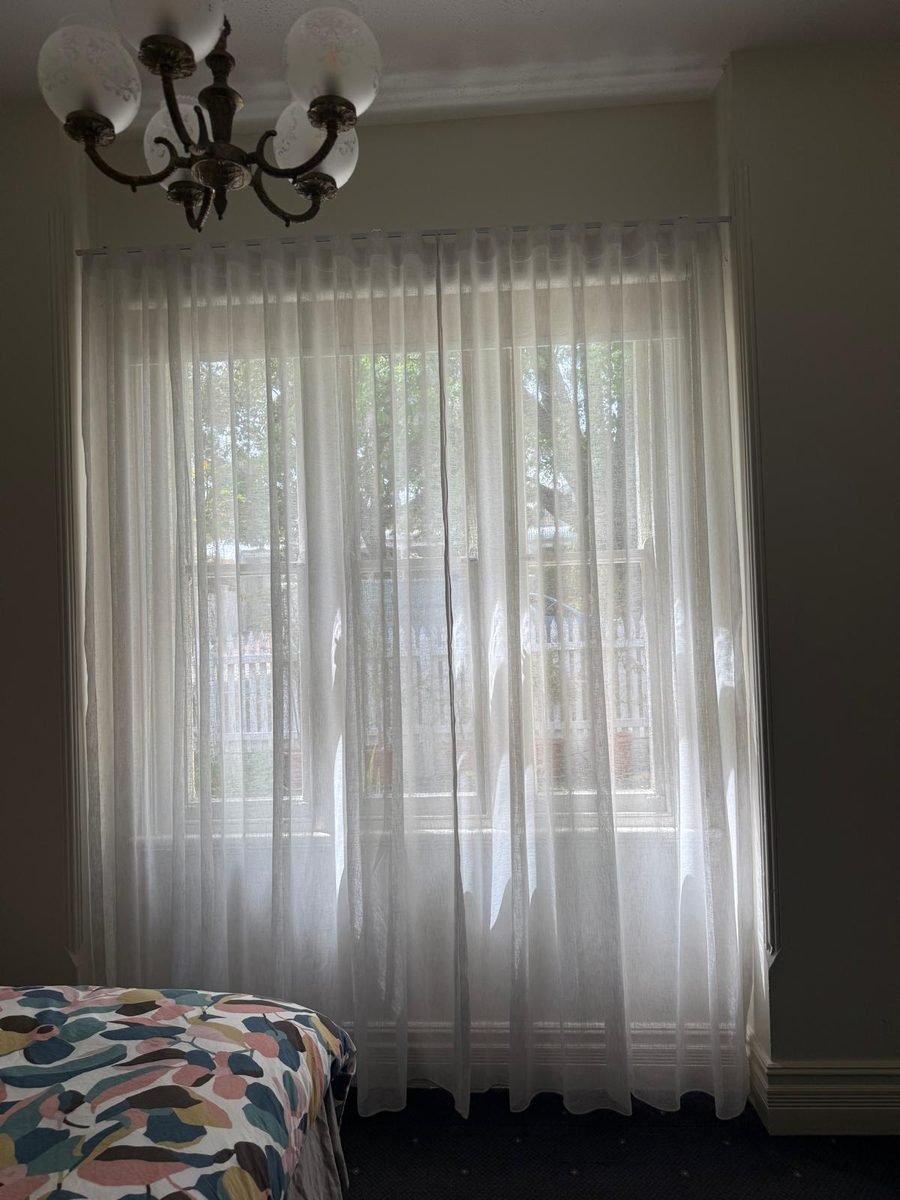
Sheer curtains are the softest option for a sliding door, and in the right room they are also the most beautiful. A full width sheer on a ceiling track drifts gently when the Fremantle Doctor comes through in the afternoon, filters the harsh Perth light into a warm glow, and gives daytime privacy without shutting the room down. In older character homes in Subiaco and Fremantle, and in modern homes with high ceilings, sheers can lift the whole room in a way a flat blind cannot.
The trade off is honesty about night privacy and heat. A sheer on its own will not stop people seeing in once the lights are on, and it will not block much heat on a west facing door in January. That is why sheers over sliding doors usually work best as part of a pair: sheers for the day, plus a blockout roller blind or a heavier curtain behind them for the night. The combination looks generous, feels lovely to use, and handles the full Perth day from morning glare to evening privacy.
- Best for: living rooms, dining rooms and character homes where soft daylight matters.
- Sheers alone give daytime privacy only; pair them with a blockout layer for night privacy.
- Wave fold headings stack neatly and keep the walkway clear on wide doors.
6. Vertical Blinds and What to Watch Out For
Vertical blinds were once the default for sliding doors in Perth, and you still see them in many older homes and rentals. The idea makes sense: vertical vanes rotate to control light and slide to one side like a door. They are affordable, they cover very wide spans, and replacement vanes are easy to get. For a rental property or a laundry door where budget matters most, they can still be a sensible choice.
The problems show up with daily use. Vanes catch in the breeze when the door is open, they tangle, they snap at the bottom weights, and they clatter in a strong afternoon sea breeze. In coastal suburbs the bottom chains and weights also cop salt air, so they need a wipe down now and then to stay tidy. If your sliding door is the main door to the backyard and it is used constantly, a vertical blind will need more attention than a panel glide or a roller blind, and it will look tired sooner.
- Best for: rentals, laundries and tight budgets where wide coverage matters most.
- Watch for tangling vanes, breeze rattle, and wear at the bottom weights.
- Fabric vanes, a full width track and wand control all improve daily use.
7. Measuring, Fitting and Getting the Details Right
A sliding door blind lives or dies on its measurements. Measure the width in three places: top, middle and bottom, because older frames are rarely perfectly square. Measure the drop from the fixing point to the floor, and note whether the blind will sit inside the reveal or face fit outside it. Then measure the handle. It sounds small, but the handle is the part that catches a blind every day. Tell your installer how far the handle sticks out and which side it sits on, so the bracket and the fabric can be set to clear it.
Perth weather adds its own checklist. In summer, a west facing sliding door can radiate heat into the room long after sunset, so a blockout layer or a sunscreen fabric helps more than a thin decorative fabric. In winter, storm fronts from the southwest drive rain against west and south facing glass. Near the coast, from City Beach to Cottesloe and down to Rockingham, salt air works slowly on metal parts, so aluminium and stainless hardware and a regular wipe down will keep a blind working like new for years longer. If you are unsure, contact us for a free measure and quote.
- Measure width at top, middle and bottom, plus handle depth and side, before ordering.
- Coastal homes: choose corrosion resistant hardware and wipe tracks and rails regularly.
- Match the blind to the daily habit: fast opening for alfresco living, darkness for bedrooms, glare control for home offices.
Frequently Asked Questions
Q. What is the best blind for a sliding door in Perth?
For most Perth homes, panel glide blinds are the best all round choice for wide sliding doors, because the panels slide sideways like the door and never block the handle. Dual roller blinds are a close second for living areas, because they give daytime light control plus night blockout from one fitting. The right answer depends on your door width, your budget and whether privacy or heat is your bigger problem.
Q. Can you fit one roller blind across a wide sliding door?
You can for a standard two panel door, but on doors wider than about 2.4 metres a single roller can become heavy, slow and prone to sagging in the middle. Two blinds side by side with a small overlap usually work better, and they let you open one side while the other stays down.
Q. Do sliding door blinds block the heat in a Perth summer?
Yes, if you choose the right fabric. Blockout fabric gives the strongest heat and light control on a west facing door, while sunscreen fabric cuts glare and keeps the view but lets more heat through. Fitting the blind close to the glass and covering the full frame also reduces the light and heat gaps at the sides.
Q. Will a blind over my sliding door stop people seeing in at night?
Only a blockout fabric, or a blockout layer in a dual roller system, gives full night privacy. Sunscreen and sheer fabrics look private during the day but become see through from outside once your interior lights are on. If night privacy matters, make sure at least one layer in your system is blockout.
Q. Are motorised blinds worth it for a sliding door?
They are often worth it on wide or high sliding doors, where a manual blind is heavy to lift and the chain sits awkwardly near the handle. Motorisation removes the chain, which is safer for children and pets, and lets you open or close the whole door covering with one button. It costs more upfront, but for a door you use many times a day the daily convenience adds up quickly.