Learning how to clean blinds properly is almost a Perth rite of passage. Our hot dry summers, the morning easterlies that push fine dust through every window gap, and that famous afternoon sea breeze all conspire to coat window coverings in grime. We visit homes from Joondalup to Mandurah every week, and one of the first things homeowners ask us is why their blinds look grey again only weeks after cleaning.
The good news is that most blinds never need harsh chemicals or an expensive deep clean. They need the right method for their material, a light regular touch, and a little knowledge of what Perth throws at them. This guide covers exactly what we tell our own customers, blind type by blind type, so your blinds stay fresh and keep working smoothly for years.
In This Guide
- Why Perth Is So Hard on Blinds
- The 10 Minute Weekly Dust Down
- How to Clean Venetian Blinds Without Taking Them Down
- Roller Blind Fabric: Gentle Spot Cleaning That Works
- Plantation Shutters: Louvre by Louvre Care
- Sheer Curtains and Fabric Blinds: Washing Without the Wrinkles
- Keep Chains, Cords and Motors Running Smoothly
- When Cleaning Is Not Enough: Repair or Replace?
- Frequently Asked Questions
1. Why Perth Is So Hard on Blinds
Perth dust is fine, stubborn and everywhere. On summer mornings the easterlies sweep across the city carrying red dust from inland WA, and it settles on every horizontal surface in the house. Slats, louvres and the tops of pelmets are perfect dust traps. Open your windows in the evening to catch the cool change and you let in another round. Even suburbs well away from the coast cop it, while coastal suburbs like Cottesloe and Scarborough get the added gift of salt air that leaves a faint sticky film on everything it touches.
Winter brings its own challenges. Strong cold fronts roll in off the Indian Ocean and drive salt spray and sand under eaves and onto outdoor areas, while damp air can leave mildew spots on fabric blinds in poorly ventilated rooms. During bushfire smoke events, fine ash settles through flyscreens and leaves a grey film across every blind. None of this means your blinds are poor quality. It means Perth homes need a cleaning routine tuned to local conditions, not a generic once a year wipe down.
- Easterly winds in summer carry fine red dust deep into homes, even with windows closed
- The afternoon sea breeze pushes salt air into coastal suburbs from Fremantle to Hillarys
- Winter storms drive sand and spray under eaves and onto outdoor blinds
- Air conditioners recirculate dust in summer, so living room blinds collect it fast
2. The 10 Minute Weekly Dust Down
Regular light cleaning beats occasional deep cleaning every time. A quick weekly dust down stops grime building up to the point where you need water, soap and a whole afternoon. Work top to bottom through each room and you will be done in minutes.
Start with the venetians and shutters, since their horizontal surfaces catch the most dust. Close the slats one way, wipe across them with a microfibre cloth or a feather duster, then tilt them the other way and repeat. For roller blinds, leave the fabric lowered and wipe down with a dry microfibre cloth in long downward strokes. Sheer curtains respond well to a vacuum with a soft brush head on low suction, worked gently from top to bottom.
- Always dust from top to bottom so you catch whatever falls onto lower surfaces
- Tilt venetian slats both ways to reach both faces of every slat
- Keep one dry microfibre cloth for dusting and a separate damp one for spots
- Vacuum sheers on low suction with a brush head, never the bare hose
- Dust the tops of pelmets and headrails
3. How to Clean Venetian Blinds Without Taking Them Down
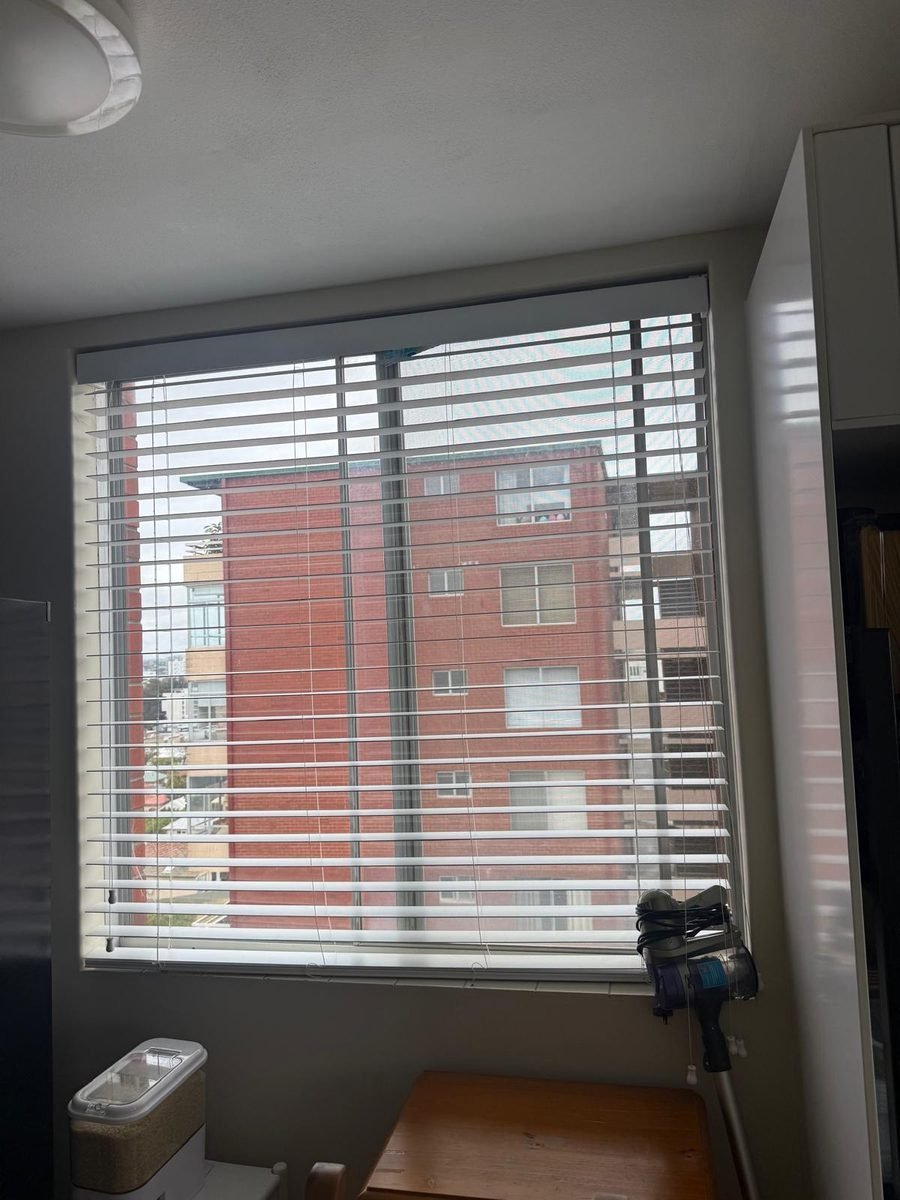
Venetians are the dustiest blinds in the house, which makes them the ones people most want to know how to clean. The good news is you rarely need to take them down. Aluminium and PVC venetians, the most common venetian blinds we install around Perth, handle a damp wipe well. Tilt the slats fully closed in one direction so they form a near flat surface, then wipe across with a warm damp cloth. Flip the tilt the other way and repeat. That gets both faces in minutes.
For stubborn spots or a kitchen blind with a light film of cooking grease, add a drop of mild dishwashing liquid to your cloth, then wipe again with a clean damp cloth to remove residue. Never soak venetian slats or pour water over them, because water pooling in the headrail can damage the mechanism and leave marks on timber slats. Timber venetians need a drier touch: a barely damp cloth only, and never leave them wet, since Perth's humidity swings can warp unsealed timber. PVC venetians are the easiest of all, a quick damp wipe and they look new again.
- Aluminium and PVC slats: warm damp cloth, mild dishwashing liquid for spots, dry finish
- Timber slats: barely damp cloth only, wipe dry straight after to protect the finish
- Avoid abrasive pads and spray cleaners, they dull the coating and trap more dust later
- Clean the ladder cords and tapes too, they go grey long before the slats do
4. Roller Blind Fabric: Gentle Spot Cleaning That Works
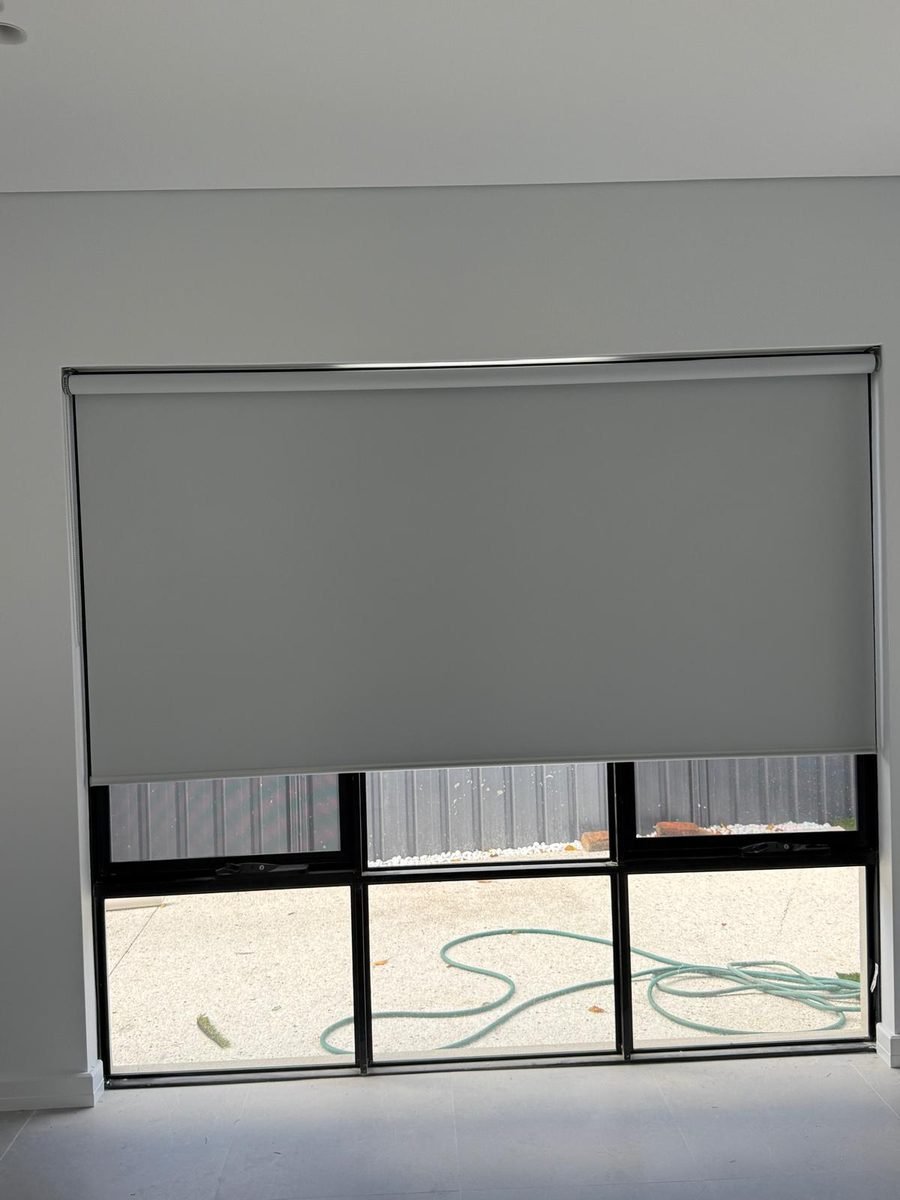
Roller blinds are the easiest window covering to keep clean day to day, but their fabric needs a gentle hand when spots appear. Most quality roller blinds come with a stain resistant coating, which means a dry approach often does the job. Roll the blind all the way down, then wipe from top to bottom with a dry microfibre cloth. You will be surprised how much surface dust lifts off with nothing more than that.
For marks, spots or the faint grey band that appears along the bottom rail where little hands and pets touch, dampen a clean cloth with lukewarm water and a tiny amount of mild detergent, then dab the spot gently. Never rub or scrub, because scrubbing can wear the coating and leave a pale patch that stands out more than the original mark. Never use bleach, strong solvents or anything abrasive. When the blind is damp, leave it rolled down until it is fully dry so the fabric does not stick to itself in the roll.
- Weekly: dry microfibre wipe from top to bottom with the blind fully lowered
- Spots: lukewarm water with a little mild detergent, dab only, never scrub
- Let damp blinds dry fully before rolling them back up
- Grease marks near kitchens may need a second gentle pass, not harder scrubbing
5. Plantation Shutters: Louvre by Louvre Care
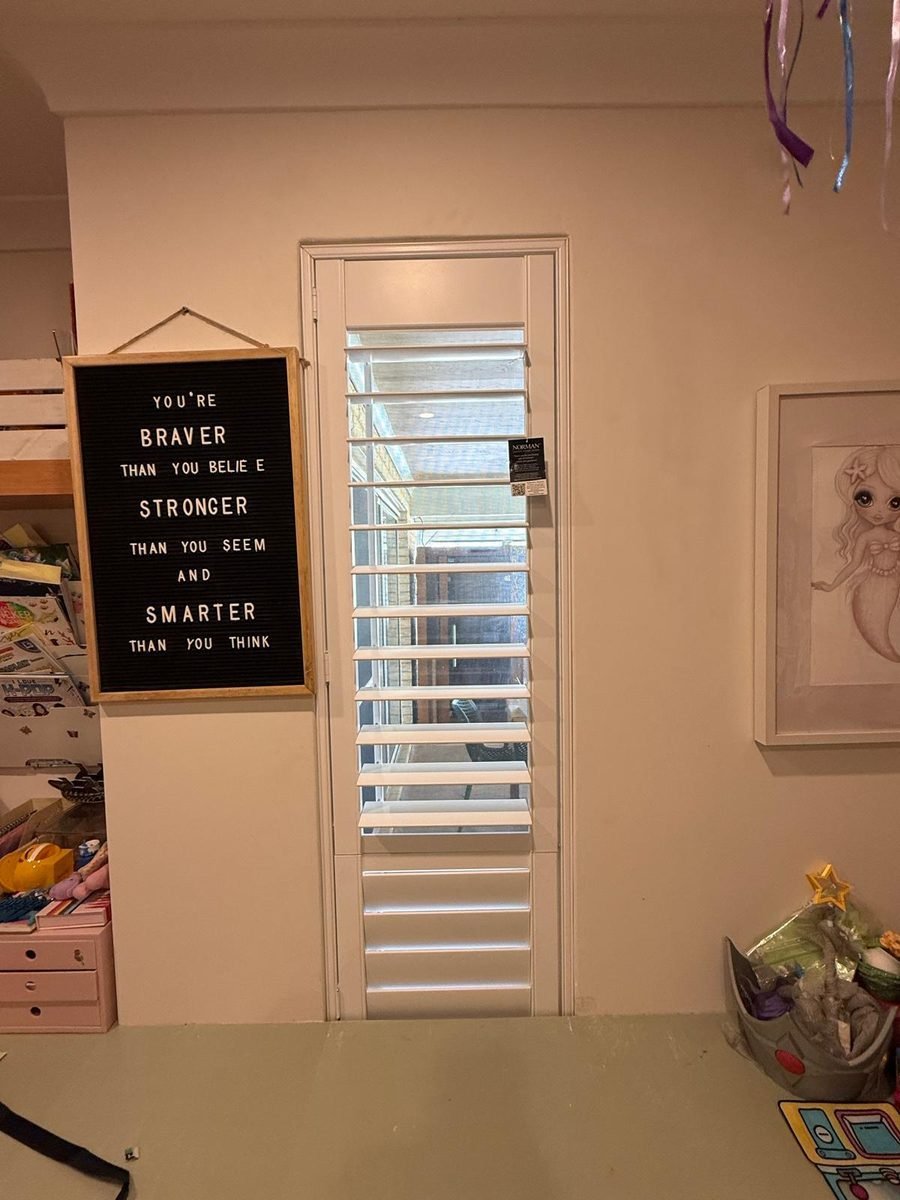
Plantation shutters are built to last decades, and their maintenance is pleasantly simple. The louvres collect dust on their top edges just like venetian slats, so open the louvres fully, run a microfibre cloth or soft brush across each one, then tilt them the other way and repeat. A soft paintbrush reaches the corners where louvres meet the frame.
For a deeper clean, wipe each louvre with a cloth wrung out in warm soapy water, then wipe again with a dry cloth so no moisture sits on the surface. Quality poly resin shutters handle this without any fuss, and they are our top pick for kitchens, bathrooms and coastal homes precisely because moisture and salt air do not bother them. Timber shutters need the same dry touch as timber venetians: damp, never wet, and dry them straight after.
- Dust louvres weekly with the louvres tilted both ways to catch both faces
- Use a soft paintbrush for the corners where dust settles out of reach
- Poly resin shutters suit kitchens and coastal homes because moisture does not hurt them
- Check the tilt rod and hinges while you clean, a loose rod is easiest to fix early
6. Sheer Curtains and Fabric Blinds: Washing Without the Wrinkles
Sheers are the filters of the house. They catch the dust and salt haze before it reaches your furniture, which means they yellow and dull faster than any other window covering in Perth. The fix is simple: take them down and wash them. Most sheer curtains do best in a cold gentle machine wash with a mild detergent. Keep the load small so the fabric has room to move, and skip the fabric softener, which can coat the weave and attract dust faster.
Hang sheers back up while they are still slightly damp. The weight of the damp fabric pulls out wrinkles naturally, which saves you ever touching an iron. For Roman blinds and other fabric styles, start with a vacuum on low suction with the brush head, since many fabrics are spot clean only. If a Roman blind needs more than that, check the care label before you reach for water, or ask us what your fabric can handle.
- Wash sheers in a cold gentle cycle with a small load and mild detergent
- Hang them back up slightly damp so wrinkles drop out on their own
- Vacuum fabric blinds with a soft brush head before trying any wet cleaning
- Check care labels on Roman blinds, many are spot clean only
7. Keep Chains, Cords and Motors Running Smoothly
Blinds fail mechanically long before they wear out visually, and most failures start with grit. Perth dust works its way into chain loops, cord locks and roller mechanisms, making operation stiff and rough. Once a month, run the chain or cord through a dry cloth to strip off the dust, then operate the blind up and down a few times to feel for any catching or grinding.
For motorised blinds, listen for changes. A motor that strains, hesitates or sounds different from usual is telling you something. Wipe the sensor eye and the solar panel on solar powered motors with a dry cloth, because dust on the sensor is one of the most common reasons a motorised blind stops responding. Never spray lubricant into mechanisms unless the maker recommends it, because lubricant plus dust forms a grinding paste. If a cord frays or a chain sticks, contact us before it snaps, a quick service call is far cheaper than a replacement.
- Wipe chains and cords monthly with a dry cloth to strip off abrasive dust
- Keep motor sensors and solar panels dust free so they keep responding
- Never spray lubricant into blind mechanisms unless the maker tells you to
- A frayed cord or sticking chain is a service job, do not force it
8. When Cleaning Is Not Enough: Repair or Replace?
Every blind reaches a point where cleaning cannot bring it back. Faded fabric that stays grey after washing, venetian slats bent by a curtain rod or a curious toddler, yellowed PVC, roller fabric fraying at the edges, or mechanisms that jam even after a good clean, these are signs the blind has given its best years. Perth sun is brutal on fabric, and a west facing blind can age twice as fast as one on the shaded side of the house.
Here is our honest rule of thumb: if the blind still operates smoothly and only looks tired, a professional clean may buy you another season or two. If it sticks, jams, has broken components or the fabric itself is damaged, replacement is usually better value than repair. We offer free quotes across Perth, and we will tell you straight whether a clean, a repair or a fresh start is the smart move.
- Replace when: fabric is faded or frayed, slats are bent, mechanisms jam after cleaning
- Repair when: the blind works well but a cord, chain or tilt wand has failed
- West facing windows age blinds fastest, factor sun exposure into your decision
- Get a free quote and we will give you an honest recommendation
Frequently Asked Questions
Q. How often should I clean my blinds in Perth?
A quick weekly dust down and a deeper clean every two to three months keeps most blinds in great shape here. Homes near the coast in suburbs like Fremantle or City Beach, and homes on busy roads, may need the deeper clean monthly because salt air and traffic dust build up faster. The weekly routine only takes about 10 minutes for the whole house once you are in the habit.
Q. Can I use water on roller blind fabric?
Yes, in moderation. A cloth dampened with lukewarm water and a little mild detergent is fine for spot cleaning most roller fabrics. Dab, do not scrub, and let the blind dry fully while lowered. What you must avoid is soaking the fabric, bleach, and harsh chemical cleaners, which can damage the stain resistant coating.
Q. What is the best way to clean plantation shutters?
Open the louvres and dust both sides weekly with a microfibre cloth, and use a soft brush for the corners. Every few months, wipe each louvre with a well wrung cloth in warm soapy water and dry it straight after. Poly resin shutters handle moisture easily, while timber shutters should stay as dry as possible.
Q. Why do my white blinds look yellow?
Sun exposure is the main culprit in Perth. Years of UV on white fabrics and PVC causes yellowing that no amount of cleaning reverses. Cooking grease speeds it up too. Once yellowing has set in, replacement is the honest answer, and choosing a UV stable fabric or poly resin shutter for sunny windows prevents a repeat.
Q. Should I hire a professional blind cleaner?
For a whole house of dusty blinds, a professional clean can be worth it every couple of years. But for ongoing care, the weekly routine in this guide does most of the work for free. Contact us if your blinds are damaged, sticking or past their best, and we will tell you honestly whether a clean, a repair or replacement makes sense.