It's one of the first questions almost every homeowner asks us: should this window get curtains or blinds? There's no single right answer. The best choice changes depending on the room, the direction the window faces, your budget and how you actually use the space day to day. Rather than pushing you toward one camp or the other, this guide breaks the decision down into the factors that matter most for Perth homes: heat, privacy, light control, cost and style, so you can make the right call window by window.
In This Guide
1. The Quick Answer
If we had to sum it up in one line, blinds tend to win on heat control, precision and low maintenance, while curtains tend to win on softness, winter insulation and finished style. Neither is objectively "better". They solve slightly different problems, and a lot of the best-looking, best-performing Perth homes use both, in different rooms, or layered on the same window.
2. Energy Efficiency: Perth Summers vs Winters
Perth's climate is the real deciding factor here, because our summers and winters pull in opposite directions. In the warmer months, west and north-facing glass takes a serious battering from direct sun, and this is where blockout blinds and sunscreen roller fabrics tend to outperform curtains. The fabric sits close to the glass, and sealed edge tracks or channels stop hot air from creeping around the sides into the room. Cellular (honeycomb) blinds take this a step further, trapping a layer of still air inside their honeycomb pockets for genuine year-round insulation.
Once the weather turns, the equation shifts. A heavy, floor-length, lined curtain creates a thicker air barrier at the window than most blinds can, which helps hold warmth in the room on a cold Perth night. The trade-off is that curtains don't seal as neatly around the edges as a tracked blind, so some heat still escapes at the top and sides unless they're floor-to-ceiling with a generous overlap.
Local tipFor west-facing living rooms in suburbs like Baldivis, Ellenbrook and Canning Vale, we usually recommend a blockout or dual roller blind as the primary heat barrier, with curtains reserved for rooms where softness and winter warmth matter more than raw UV rejection.
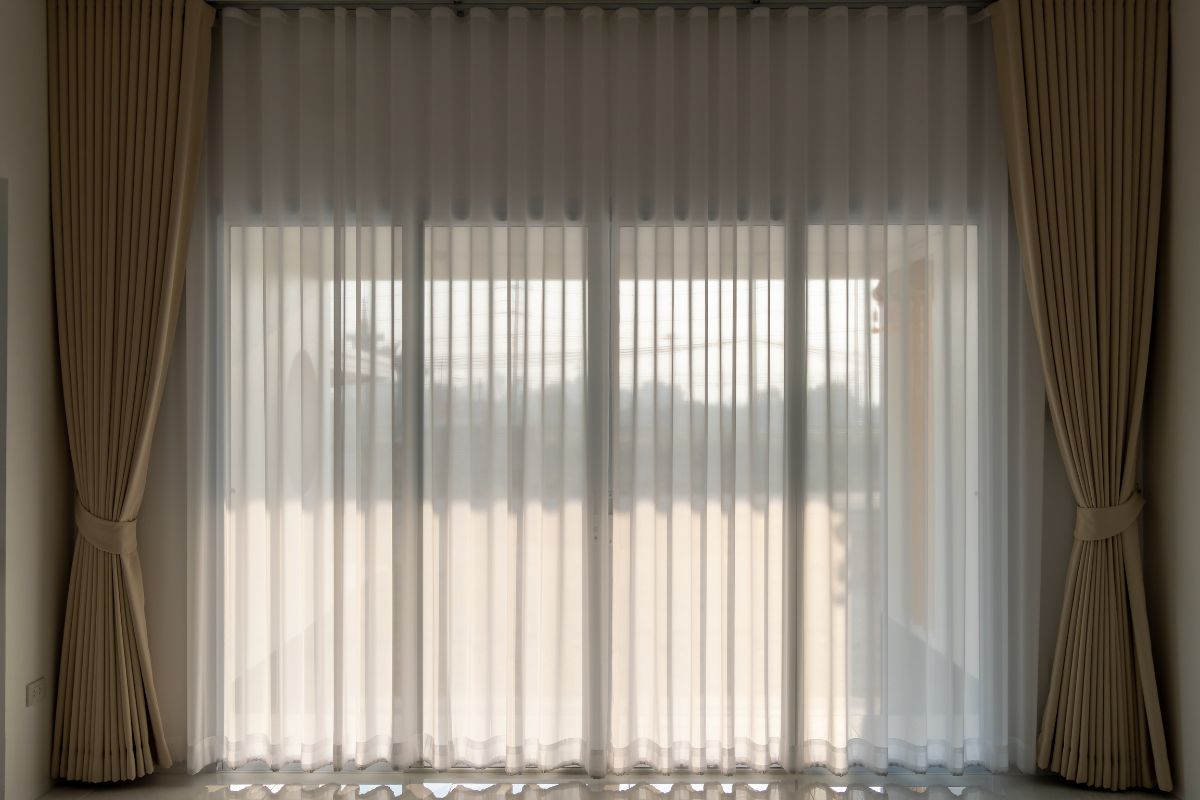
Sheer curtains soften daytime light while a blockout blind behind them handles heat and privacy.
3. Privacy & Light Control
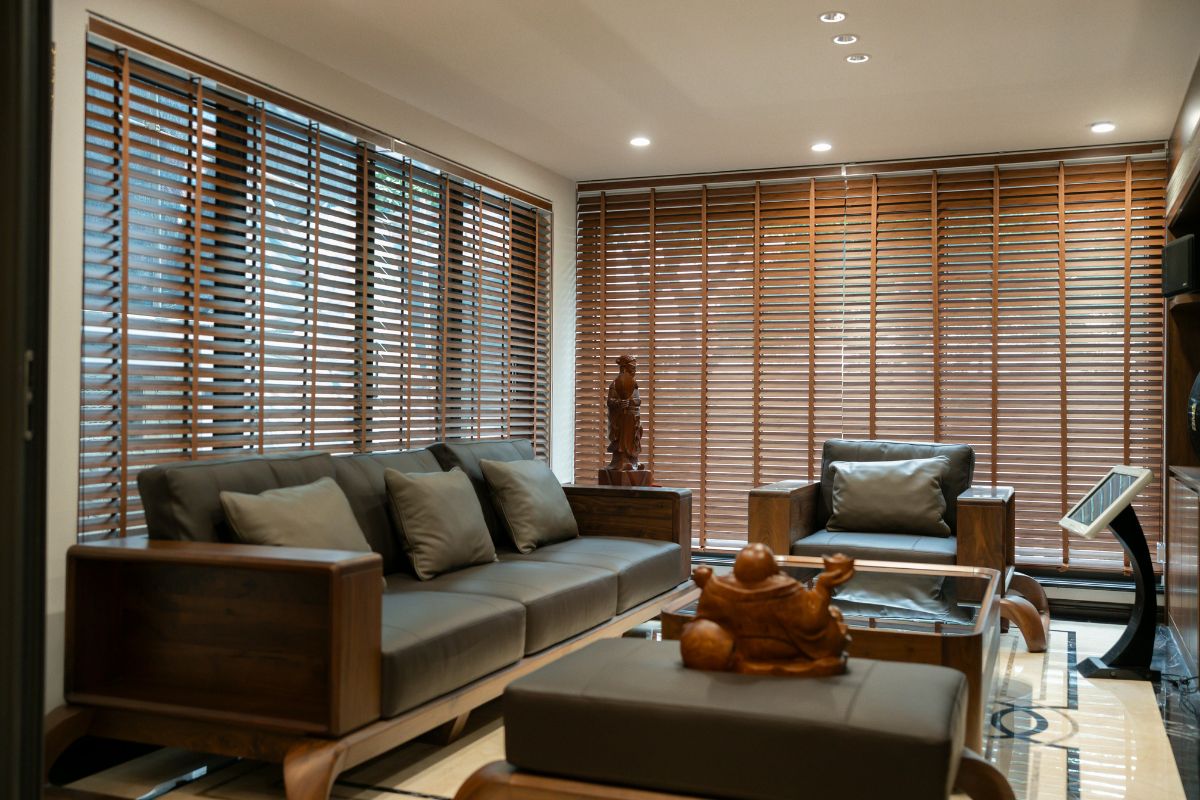
This is where blinds usually have the edge for anyone who wants fine control. Venetian blinds let you angle the slats to let light in while blocking a direct line of sight, so you can keep a room bright without feeling exposed to the street, something a curtain simply can't do, since it's either open or closed. Roller and roman blinds offer a similar middle ground with light-filtering fabrics that soften glare without full blockout.
Curtains, on the other hand, are unbeatable for total, instant privacy and darkness once fully drawn, which is exactly why bedrooms so often end up with blockout curtains, sometimes paired with a sheer layer for daytime. If you want the room pitch black for sleep, a well-fitted blockout curtain with a generous width (so there's no gap at the sides) is genuinely hard to beat.
Not Sure Which Suits Your Windows?
Our team measures and advises on-site, completely free, with no pressure to buy.
4. Style, Texture & Resale Appeal
Custom curtains bring a softness and texture that blinds can't replicate. Heavy linen, tailored pleats and floor-length drops instantly make a living or dining room feel more finished and considered, which is part of why they remain popular in main bedrooms and formal living areas. Sheer curtains add a similar lift to a room without sacrificing daylight, and pair beautifully with a blockout blind behind them for both function and finish.
Blinds lean into a cleaner, more contemporary look, and tend to suit kitchens, home offices and minimalist interiors where a busy fabric would compete with the rest of the room. From a resale perspective, buyers in Perth generally respond well to both, provided the window coverings look intentional, are properly fitted, and suit the scale of the window. An undersized curtain or a cheap, sagging blind will hurt a room's appeal far more than the choice of curtain versus blind ever will.
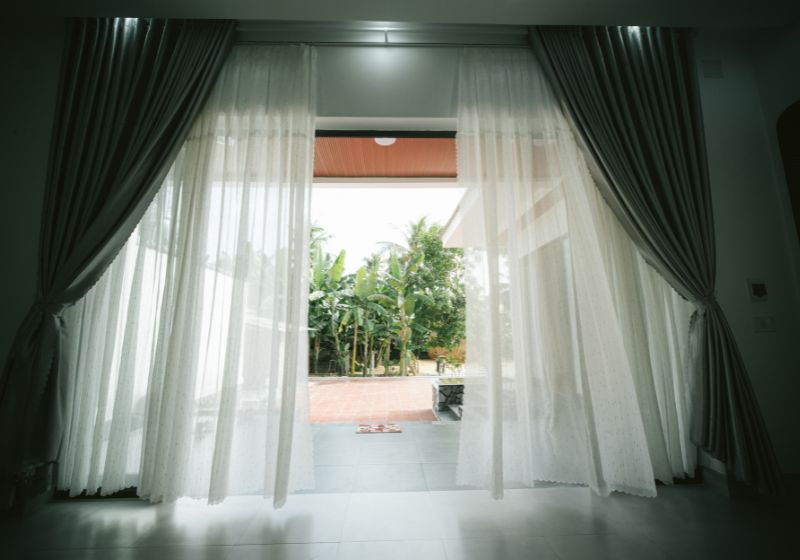
Floor-length custom curtains add texture and a finished, tailored look to living and dining spaces.
5. Cost & Maintenance
As a general starting point, roller blinds tend to be the most budget-friendly per window, since they use less fabric and a simpler mechanism than a full curtain treatment. Custom curtains involve more fabric, lining and often a track or rod, so the price climbs with width, drop and fabric quality. A wide bay window in heavy lined fabric will always cost more than a single roller blind of the same width. The most accurate way to compare is a free in-home measure and quote, since fabric choice and window size affect both products significantly.
On maintenance, blinds are the lower-effort option day to day. A wipe-down or occasional dust keeps most fabrics and slats looking sharp. Curtains need more regular care, particularly in dusty areas or homes near busy roads, and heavier fabrics may need professional cleaning rather than a home wash.
6. Room-by-Room Recommendations
- Bedrooms: blockout curtains, or a blockout blind layered with sheer curtains, for darkness and softness together.
- Living & dining rooms: custom curtains for style, or a dual roller blind if you want a cleaner, lower-maintenance look.
- Kitchens: roller or venetian blinds, easier to keep clean around cooking splashes and steam.
- Home offices: venetian or roman blinds for adjustable glare control without curtains bunching near a desk.
- West-facing windows: blockout or dual roller blinds as the primary heat barrier, curtains as an optional style layer.
For rooms that open onto a patio or alfresco, it's also worth thinking about how indoor coverings work together with your outdoor blinds, since shading the glass from outside reduces how hard your indoor curtains or blinds need to work in the first place.
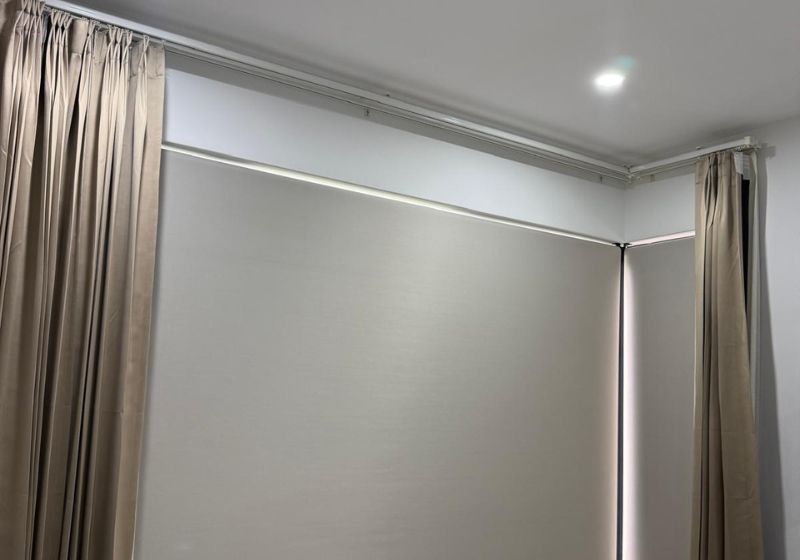
Roller blinds are a practical, low-maintenance choice for kitchens and busy family spaces.
7. Why Not Both? The Case for Layering
Some of the best-performing windows we install don't choose one or the other. They combine a functional blind with a decorative curtain. A blockout or sunscreen roller blind sits close to the glass to manage heat, glare and privacy through the day, while a curtain layered in front softens the look, adds a further layer of insulation on cold nights, and gives you the option to frame the window open when you want maximum light. If budget only allows one option per window for now, prioritise the functional layer first (usually the blind) and add curtains later as a style upgrade. Our indoor blinds range and curtain range are designed to work together this way.
Frequently Asked Questions
Q. Are curtains or blinds better for a Perth summer?
Blinds generally have the edge in summer because slats and blockout fabrics sit close to the glass and can be angled or sealed to reject heat before it spreads through the room, while curtains rely on fabric weight and lining to slow heat once it's already inside.
Q. Are curtains warmer than blinds in winter?
Yes, in most cases. A well-lined, floor-length curtain forms a thicker air barrier at the window than blinds, which helps hold warmth in a room during Perth's cooler winter nights.
Q. Can I use curtains and blinds together on the same window?
Absolutely, and it's one of the most requested combinations we install. A blockout or sunscreen roller blind handles daily light and heat control, while sheer or blockout curtains add softness, extra insulation and a finished, layered look. See our blinds buying guide for more on choosing the functional layer first.
Q. Which is cheaper, custom curtains or custom blinds?
Entry-level roller blinds are usually the more budget-friendly starting point per window, while curtains involve more fabric and labour, so pricing climbs with width, drop and lining. A free measure and quote is the most accurate way to compare like-for-like pricing for your windows.