Walk through any well dressed living room in Mount Lawley, Applecross or Iluka and you will usually find this pairing at work. A neat roller blind sits close to the glass, and a sheer or a heavier curtain hangs in front of it on a rod or track. During the day the sheer softens the light while you can still see the garden. At night the blind comes down, the curtain closes, and the room feels private and warm.
It suits Perth homes especially well: our windows deal with fierce summer sun, the afternoon Fremantle Doctor, and cold winter fronts that rattle the glass. This guide walks through the combinations that actually work, the order to choose them in, and the fitting details that separate a layered window that looks made to measure from one that looks like an afterthought.
In This Guide
- Why Layering Works So Well in Perth
- Start With the Blind or the Curtain
- Five Layering Combinations That Work in Perth Homes
- Sheers Over Blockout: The Classic Perth Pairing
- Getting the Hardware Right: Rods, Tracks and Pelmets
- Layering for Sliding Doors and Wide Openings
- Colour, Fabric and Pattern: Making the Pair Look Intentional
- Common Layering Mistakes and Easy Fixes
- Frequently Asked Questions
1. Why Layering Works So Well in Perth
Perth asks more of a window than most Australian cities do. Summer afternoons can push past 40 degrees, and the sun sits hard on west facing glass for hours. Then the Fremantle Doctor rolls in off the ocean and drops the temperature fast, which can leave a room feeling draughty if the window dressing is thin. Winter brings a different problem: cold fronts sweep in from the Indian Ocean, rain drives sideways, and a single sheer does nothing to hold the warmth in.
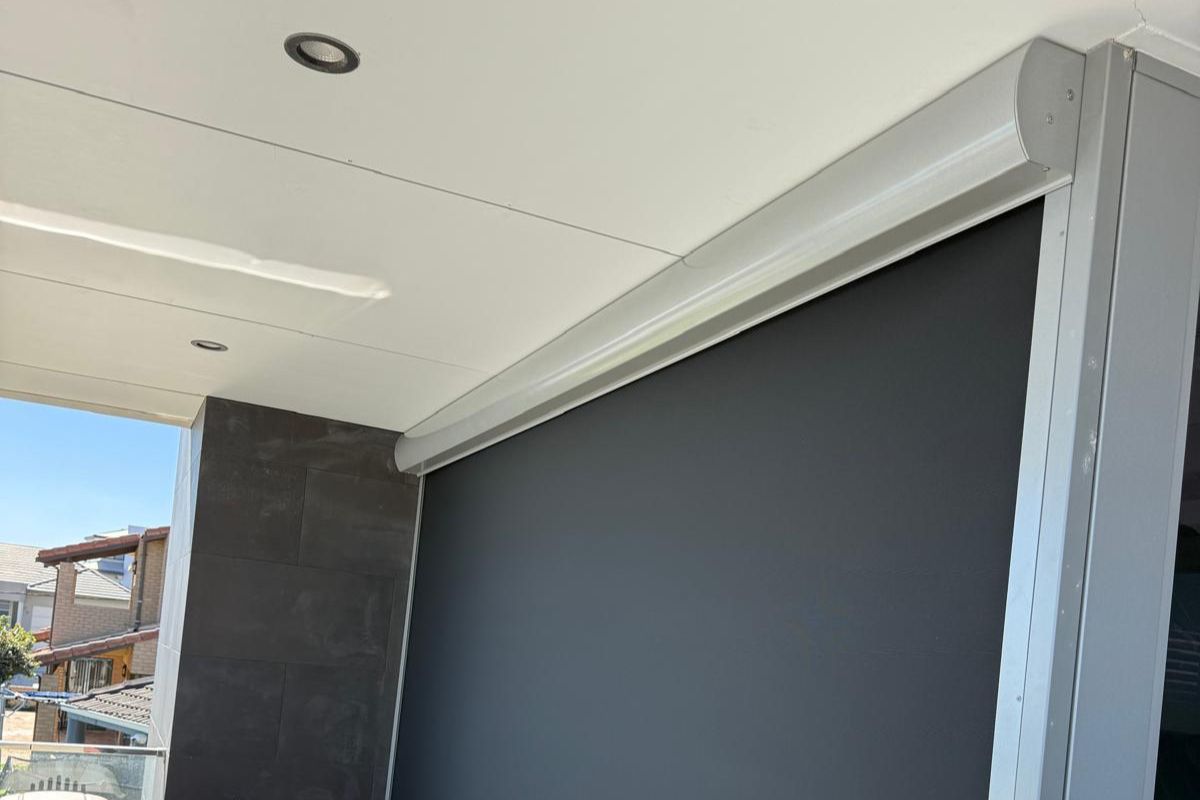
Layering answers each problem with a different layer. The blind is the workhorse: a blockout roller or plantation shutters cut the heat before it reaches the room and give you total privacy at night. The curtain is the finisher: sheers filter the glare and soften the view, while heavier drapes add insulation and a sense of occasion. Together they give you four or five settings for one window instead of just open or shut. Curtains also hide the hard edges of a blind, the cassette, the brackets and the cords, so even a plain white roller looks finished.
2. Start With the Blind or the Curtain
Most people start with the curtain because that is the part they see in the shop. We suggest starting with the blind instead, because the blind sets the limits for everything else. It decides how much heat and light you can block, how the window operates, and how much space is left in the reveal for a curtain track or rod. Pick the blind first and the curtain choice gets easier, not harder.
Ask three questions about the blind. First, what does this room need most: darkness for sleep, heat control for a west facing living room, or daytime privacy for a street facing window? Second, how will you use it every day: a roller you pull down at night, shutters you tilt through the day, or a motorised blind for a high window? Third, does it sit inside the reveal or on the face of the architrave? An inside fit looks tidy but leaves less room for a curtain in front. Once the blind is settled, choose the curtain to do the job the blind cannot: a sheer softens a plain blockout roller blind, while timber plantation shutters suit a simple sheer on a slim rod. The curtain should complete the blind, not compete with it.
3. Five Layering Combinations That Work in Perth Homes
These are the pairings we fit most often, and the ones our customers come back happiest with. Each suits a different room and budget, so treat this as a shortlist, not a rule book.
If you are not sure which pairing suits your room, start with the first one. A blockout roller with sheers is the most forgiving combination we fit, and the sheer can be swapped later without touching the blind.
- Blockout roller plus sheers: the all rounder. Darkness and heat control from the roller, daytime privacy and soft light from the sheer. Best for bedrooms, living rooms and street facing windows.
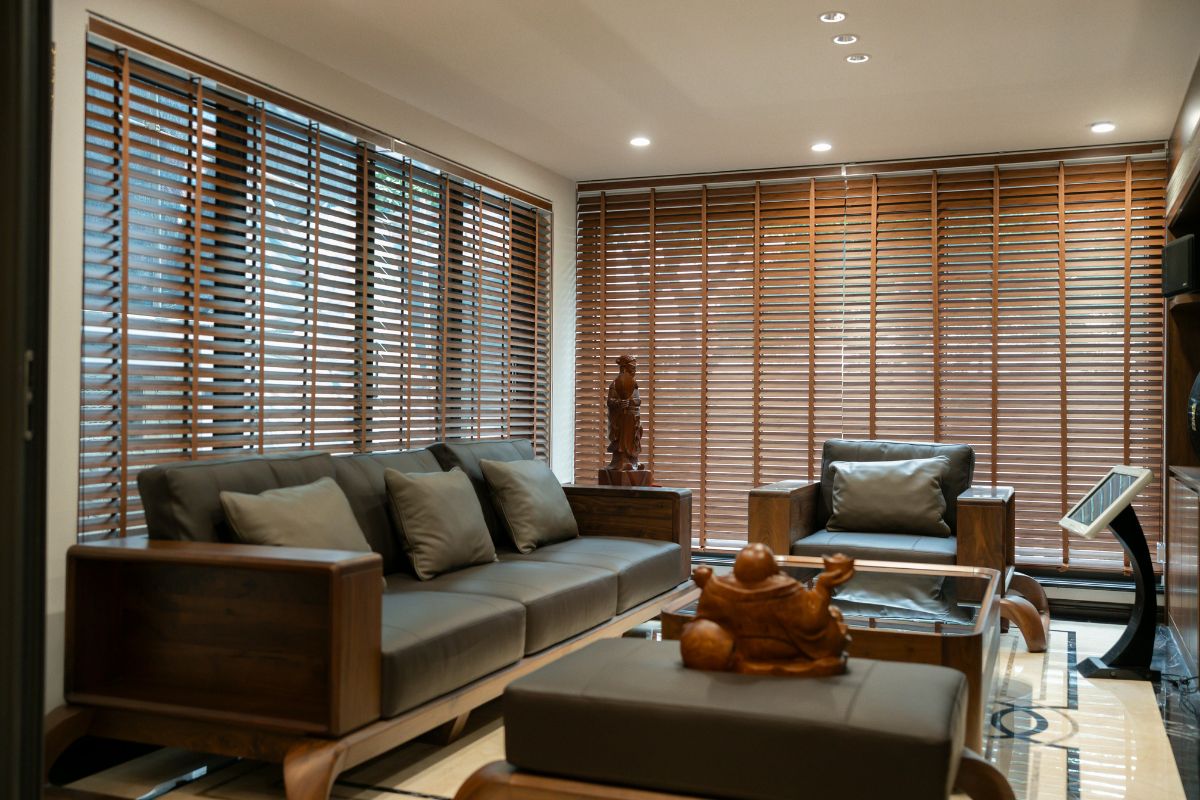
- Plantation shutters plus sheers: the classic. Shutters handle the heat with precise light control, while sheers soften the hard lines. Best for front rooms, dining rooms and coastal style homes.
- Light filtering roller plus drapes: the cosy option. The roller takes the edge off the glare by day, the drapes close at night for warmth. Best for living rooms and media rooms.
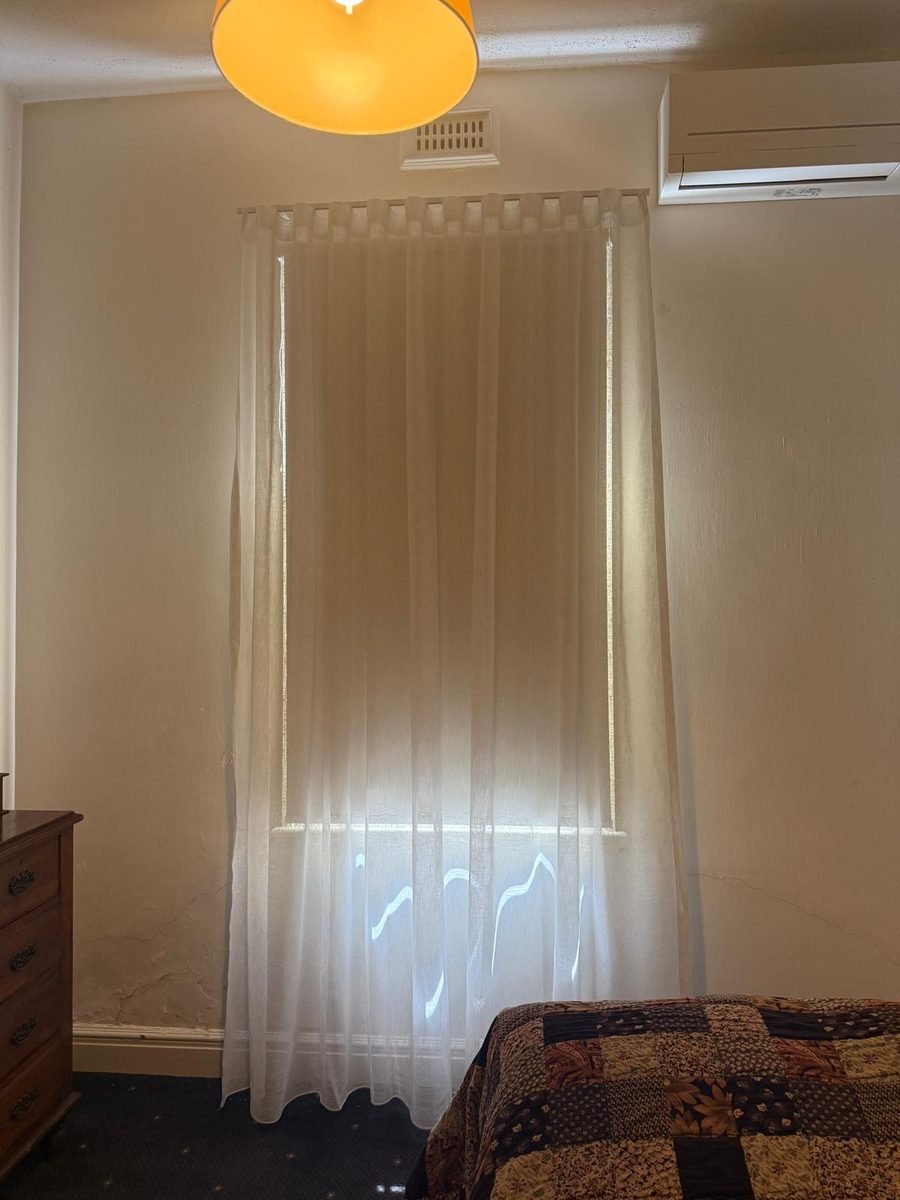
- Sheer roller plus blockout curtain: the reverse layer. A sheer roller gives daytime privacy, a blockout curtain in front gives darkness at night. Best for bedrooms.
- Vertical blinds plus sheers: the wide window answer. Verticals cover sliding doors neatly, sheers in front soften the straight lines. Best for sliding doors and large windows in open plan living areas.
4. Sheers Over Blockout: The Classic Perth Pairing
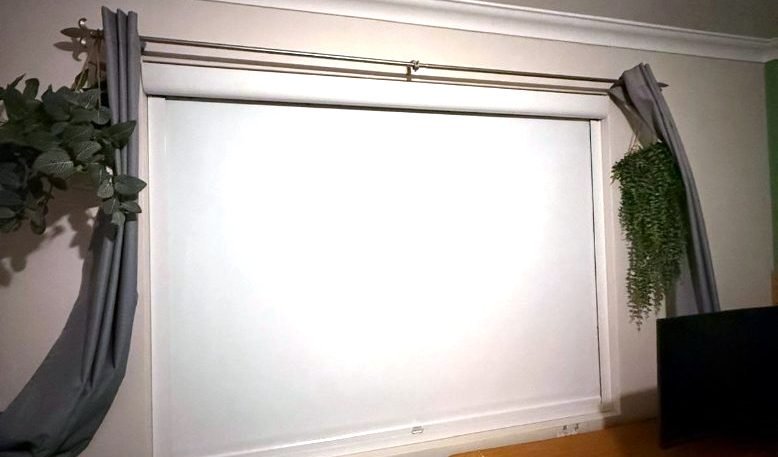
This is the combination in the photo at the top of this guide: a white blockout roller blind with grey sheer curtains tied back on either side. In summer the blockout roller stops the worst of the heat coming through the glass, and the sheer lets you keep the blind up during the day without feeling exposed to the street. In winter the same pairing works in reverse: blind down and sheer closed trap a surprising amount of warmth.
Getting it right comes down to three details. First, the sheer should be full enough to look generous when closed: aim for at least one and a half times the window width, and two times for a soft, gathered look. A flat sheer that barely covers the glass looks mean and will not filter the light evenly. Second, hang it so it just kisses the floor or the sill, with the hem level. Third, choose a sheer curtain fabric that suits the light: white or ivory voile keeps things bright, while a grey or natural linen look sheer warms a cool, south facing room. Mount the rod a little wider than the blind and a little higher than the frame, so the tied back sheers frame the blind and the window looks taller.
5. Getting the Hardware Right: Rods, Tracks and Pelmets
Layering fails more often on hardware than on fabric: two layers need two separate fixings, each with enough clearance to move without catching on the other. A roller blind needs about 70 millimetres of depth from the wall, and a curtain track or rod needs its own space in front of that. If the two are squeezed together, the curtain will catch on the blind every time you draw it, and the blind chain can snag on the curtain heading.
Measure the depth before you order anything: for a face fit roller with a sheer in front, allow at least 150 millimetres from the wall to the front of the curtain rod, and check the curtain can pass the blind cassette without rubbing. On windows with a deep reveal you can fit the blind inside the reveal and the curtain on the face. On shallow reveals, a double track or a double rod bracket does the same job. A pelmet or a slim cassette helps too, because it hides the roller and gives the curtain a clean line to hang from. And if you are fitting curtains over shutters, remember the shutter frame already takes up depth, so the rod needs to sit further out than you might expect.
6. Layering for Sliding Doors and Wide Openings
Sliding doors are where layering earns its keep in Perth. A big glass door to the alfresco is wonderful in winter and brutal in summer, and one layer rarely covers both jobs. Vertical blinds are the usual workhorse: they stack neatly to one side, tilt for light control, and cover a wide opening without a join in the middle. Add a sheer curtain in front and the whole wall softens.
Panel glide blinds are another strong option for wide openings. The panels slide on a track and stack flat out of the way, while a sheer on a separate track in front gives you the daytime privacy panels alone do not offer. This pairing is popular in newer homes in Alkimos, Baldivis and Byford, where living areas open onto the backyard. If your door opens onto a patio, outdoor blinds outside can work with the indoor layers to cut the heat before it reaches the glass. The fitting detail that matters most is the stack: hang the curtain so it stacks on the opposite side to the blinds, or frames the opening evenly. If both layers stack on the same side you lose light and the doorway feels narrow.
7. Colour, Fabric and Pattern: Making the Pair Look Intentional
A layered window looks intentional when the two layers share a colour, a texture, or a tone. The easiest way to get it right is to keep the blind neutral and let the curtain carry the colour. A white or warm grey roller is a blank canvas that sits happily behind almost any curtain, from a soft linen look to a deep green drape. The reverse also works, but it is harder to change later, so we usually steer people toward a neutral blind and a curtain they can swap when tastes change.
Fabric choice matters more in Perth than in cooler cities, because the sun is so strong. Natural fibres like linen and cotton look beautiful but fade faster on a west facing window, so a linen look polyester or a blended fabric will hold its colour longer. If you love real linen, use it on a south or east facing window, or behind a blockout blind. Keep the pattern simple: one patterned layer is plenty. Coastal suburbs like Cottesloe, Hillarys and Mandurah suit pale tones: white, sand, soft grey and pale blue. Inland suburbs and newer estates suit warmer tones: oatmeal, warm grey, sage and terracotta. If you are stuck, pick the curtain colour from something already in the room, a rug, a cushion, a piece of art.
8. Common Layering Mistakes and Easy Fixes
We see the same handful of layering mistakes on call outs, and most are cheap to fix. The first is the blind and the curtain fighting for the same space, which usually means the rod was mounted too close to the wall. The fix is a longer bracket or a double rod. The second is a sheer too narrow for the window, which looks flat and lets stripes of light through at the edges. The fix is a fuller sheer, or a second panel.
The third mistake is choosing the layers in the wrong order, so two products do the same job: a light filtering blind behind a light filtering curtain gives you no darkness at all. The fix is to make each layer do a different job, one for light and one for darkness, or one for privacy and one for heat. The fourth is forgetting the cords and chains: a curtain that covers the blind chain looks tidy but hides the control you need every day, so leave a gap or use a motorised blind with a remote. The last mistake is buying the curtain before measuring the blind, so measure with the blind in place, or get us to measure both layers together. A free measure and quote takes the guesswork out of it. If your layered windows are already fitted and something is not sitting right, get in touch and we will take a look.
Frequently Asked Questions
Q. Can you put curtains over roller blinds?
Yes, it is one of the most popular combinations we fit in Perth. A blockout roller sits close to the glass for heat control and darkness, and a sheer or heavier curtain hangs in front on a separate rod or track. The key is clearance: allow enough depth so the curtain clears the blind cassette, and mount the rod a little wider and higher than the window.
Q. Do curtains and blinds together keep a room cooler in summer?
Yes. A blockout blind stops most of the heat at the glass, and a curtain in front adds a second layer of insulation and cuts the glare. Together they beat either layer on its own, especially on west facing windows that cop the afternoon sun. Close the blind through the hottest part of the day, then open both once the Fremantle Doctor arrives.
Q. What is the best blind to layer under sheer curtains?
A blockout roller blind is the best all rounder: darkness, privacy and heat control in a slim profile that fits neatly behind a sheer. Plantation shutters are a close second and suit homes with a classic or coastal look.
Q. How much wider should the curtain rod be than the blind?
As a guide, mount the rod or track at least 100 to 150 millimetres wider than the window on each side, and the same amount above the frame. That gives the curtains room to stack clear of the glass when open, and makes the window look taller and wider.
Q. Can you layer curtains over plantation shutters?
Yes. Shutters and sheers are a classic pairing for Perth homes with a Hamptons or coastal style. The shutters handle heat and light control through the louvres, and the sheer softens the look. Just allow extra depth, because the shutter frame already sits proud of the wall, so the curtain rod needs to sit further out than over a roller blind.
Q. Do layered curtains and blinds cost more than one layer on its own?
Yes, two layers cost more than one, but the pair usually costs less than a single premium product that tries to do every job at once. A good quality blockout roller with a simple sheer is often the best value way to get darkness, privacy, heat control and a finished look.