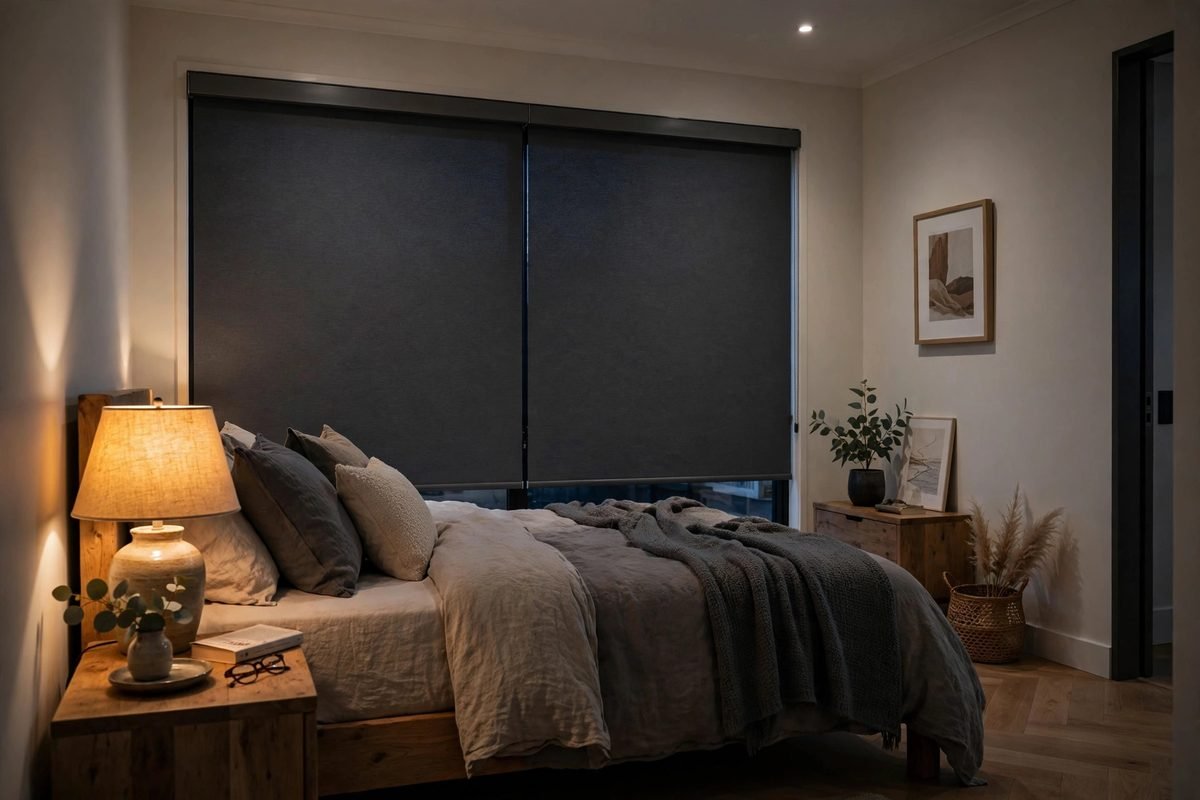
If you have ever been woken at 5am by Perth sun blazing through your bedroom window in the middle of summer, you already understand the appeal of blockout blinds. They promise something simple and powerful: darkness on demand, in the brightest capital city in Australia.
But walk into any blinds showroom and you will quickly realise there is more to get right than most people expect. Fabric types, mounting styles, light gaps, motorisation, and of course cost. Get these decisions right and blockout blinds are one of the best upgrades you can make to a bedroom. Get them wrong and you end up with an expensive blind that still leaks light around the edges.
This guide walks through what blockout blinds actually do, what they cost in Perth right now, which fabrics and styles suit our climate, and the honest answer on whether they are worth the money. Everything here is based on what we see in real Perth homes every week.
In This Guide
- What Blockout Blinds Actually Do
- Blockout vs Light Filtering vs Sunscreen Fabrics
- What Drives the Cost in Perth
- Roller, Roman or Panel Glide: Choosing Your Style
- Blockout Blinds for Bedrooms, Nurseries and Shift Workers
- Do Blockout Blinds Help With Perth's Summer Heat
- Measuring and Installation: Getting It Right
- So, Are Blockout Blinds Worth It
- Frequently Asked Questions
1. What Blockout Blinds Actually Do
A true blockout blind uses an opaque fabric, usually with a coated or foam backing, that stops light passing through the material itself. When the blind is down, the room goes dark. That is the core promise, and a good quality blockout fabric delivers it well.
What surprises a lot of buyers is that the fabric is only half the story. The other half is light gaps. A blind mounted inside the window frame will always let some light creep in around the sides, top and bottom. In a Perth summer when the sun is up before 5:30am, even a thin sliver of light can be enough to wake a light sleeper.
This is why the mounting style matters as much as the fabric. A face fit blind, mounted on the wall or architrave around the window rather than inside the reveal, overlaps the opening and cuts those gaps dramatically. For bedrooms where darkness really matters, we almost always recommend face fit over reveal fit. It is a small detail that makes a big difference at 5am.
One more thing worth knowing: blockout refers to light, not sound or heat directly. The fabric will darken the room and it will take the edge off radiant heat, but it is not insulation in the way double glazing is. We will come back to the heat question shortly because it matters a lot in Perth.
2. Blockout vs Light Filtering vs Sunscreen Fabrics
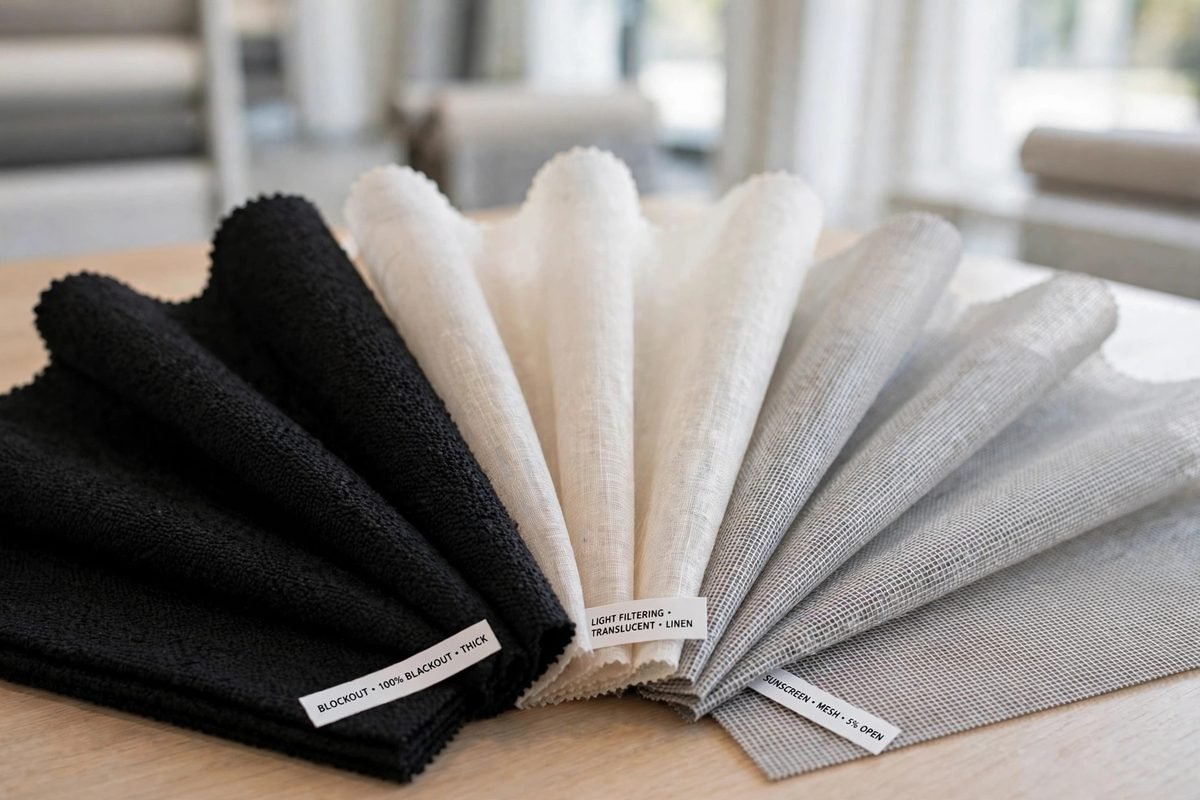
Not every dark looking blind is a blockout blind, and this is where most confusion starts. There are three main fabric families and they do very different jobs.
Blockout fabrics are fully opaque. Hold them up to the sun and no light comes through. They are the right choice for bedrooms, nurseries, media rooms and anywhere you want real darkness.
Light filtering fabrics, sometimes called translucent fabrics, soften daylight and give you privacy while still letting a glow through. They are lovely in living areas where you want a bright but gentle room. They will not give you darkness though, so do not put them in a bedroom and expect to sleep through a Perth sunrise.
Sunscreen or mesh fabrics are a different thing again. They cut glare and UV while keeping your view, which makes them popular for living rooms with a outlook worth keeping. At night they offer almost no privacy once interior lights are on, so they are usually paired with a second layer.
That pairing has a name: dual roller blinds. One sunscreen blind for daytime view and glare control, one blockout blind behind it for night time privacy and darkness. It is one of the most popular setups we install in Perth living areas, and it solves the day versus night problem neatly. You can read more about the style options on our roller blinds page.
3. What Drives the Cost in Perth
Let us talk money honestly. Blockout blinds in Perth typically run from a couple of hundred dollars for a small standard window up to significantly more for large sliding doors or wide openings. Most bedrooms fall somewhere in the middle. The exact figure depends on a handful of factors.
Size is the biggest one. A blind is priced largely on fabric area plus the operating system, so a two metre wide sliding door costs notably more than a one metre bedroom window. If you are budgeting for a whole house, measure every window and expect the large living areas to carry the biggest share of the total.
Fabric choice comes next. Entry level blockout fabrics do the job fine, while premium ranges offer nicer textures, better colourfastness in our harsh UV, and sometimes thermal coatings. Given how hard Perth sun is on fabrics, stepping up one level from the cheapest option usually pays for itself in lifespan.
Operating system matters too. A standard chain drive is the most affordable. Motorisation adds a few hundred dollars per blind, which we will discuss in the FAQ. And mounting style plays a role: face fit sometimes needs extra brackets or pelmets, which adds a little to the job.
The best way to get an accurate figure is a free measure and quote at your home, because every window is a slightly different job. If you would like one, you can book a free quote and we will measure everything properly with no obligation.
4. Roller, Roman or Panel Glide: Choosing Your Style
Blockout fabric comes in several blind styles, and the style you choose changes both the look and how well the blind blocks light.
Roller blinds are the most popular blockout option in Perth for good reason. They are clean, simple, affordable, and when face fitted they give excellent light control. They suit modern homes and they are easy to operate daily. For most bedrooms, a blockout roller blind is the default recommendation and it is hard to argue against.
Roman blinds give you the same blockout fabric but with soft folds that look more tailored and traditional. They suit bedrooms where you want a warmer, more decorated feel. The folds mean they stack a little deeper at the top when raised, so they need a bit more clearance.
Panel glides are the answer for wide sliding and stacking doors. Instead of one enormous roller, fabric panels slide across on a track. They handle big spans gracefully and look sharp in open plan living areas that open to an alfresco.
Whichever style you choose, the light gap principle stays the same. Face fit beats reveal fit for darkness every time. If your heart is set on a neat reveal fit for the look, just go in knowing a little light around the edges is part of the deal.
5. Blockout Blinds for Bedrooms, Nurseries and Shift Workers
Bedrooms are where blockout blinds earn their keep, and in Perth they work harder than almost anywhere else in the country. Our summer sunrises are early, our sunsets are late, and the light is intense. Anyone who has tried to sleep past 6am in January with sheer curtains knows exactly what we mean.
For nurseries and kids rooms, blockout blinds are close to essential. Babies and toddlers sleep better in dark rooms, and Perth daylight stretches well past most bedtimes in summer. Pair the blind with a face fit mount and you will wonder how you ever managed without it.
Shift workers are the other group who benefit enormously. If you are sleeping during the day after a night shift at the hospital or on the mines roster, a dark room is not a luxury, it is a health issue. We have fitted blockout blinds for plenty of shift workers across Perth and the feedback is always the same: wish we had done it sooner.
One practical tip for bedrooms: think about the whole window, not just the glass. Light also sneaks in above the blind if there is a gap between the top of the window and the ceiling mount. A good installer will spot this during the measure and suggest the right bracket or pelmet to close it off.
6. Do Blockout Blinds Help With Perth's Summer Heat
This is one of the most common questions we hear, especially for west facing rooms that cop the full afternoon sun. The honest answer is yes, they help, but with realistic expectations.
A blockout blind with a light coloured or reflective backing bounces a good portion of radiant heat back out the window before it heats your room. In a west facing bedroom on a 40 degree day, that can be the difference between a room that is merely warm and one that is unbearable by 4pm. Your air conditioner will also thank you, since it has less heat to fight.
But a blind is not insulation. Heat still conducts through the glass itself, and on extreme days the room will still warm up. If heat is your main problem rather than light, the best results come from tackling it outside the glass: outdoor blinds, awnings or shade sails stop the sun before it hits the window at all. Inside, blockout blinds are the second line of defence and they do a solid job of it.
Colour choice plays a small role here too. Lighter fabrics reflect more heat back out, while dark fabrics absorb it and can radiate some warmth into the room. If you love the look of a dark charcoal blind, that is fine, just know a white or light grey backing will perform a little better on the hottest afternoons.
7. Measuring and Installation: Getting It Right
Blockout blinds are one of those products where the measure matters as much as the product. A millimetre here or there is the difference between a blind that sits beautifully and one that leaves a glowing stripe down one side.
The big decisions at measure time are mount type and overlap. For face fit, we measure the full opening plus generous overlap on all sides, usually at least 50mm beyond the architrave on each side and above. For reveal fit, we measure the exact opening and deduct a small tolerance so the blind operates freely.
Obstacles need a plan too. Window winders, handles, security screens and alarm sensors can all interfere with a blind if they are not accounted for. A proper measure spots these and works around them, sometimes with packers or stand off brackets.
This is also the moment to think about chain safety if you have young kids. Chain driven blinds should have tensioning devices fitted, or you can sidestep the issue entirely with motorisation. It is a small detail that matters a lot in family homes.
Our advice is simple: take the free professional measure. It costs nothing, it takes about half an hour for a whole house, and it removes the most common source of disappointment with blockout blinds.
8. So, Are Blockout Blinds Worth It
For bedrooms, nurseries and anyone sleeping during the day: absolutely yes. There is no cheaper way to buy better sleep in a Perth summer. The difference between waking at 5:30am to full daylight and sleeping through to your alarm is genuinely life changing for light sleepers.
For living areas, it depends on how you use the room. If you watch movies in the afternoon or you have a west facing living room that turns into a furnace, blockout blinds or a dual roller setup are well worth it. If your living room already has good shade from eaves or an alfresco roof, a light filtering fabric might serve you better and cost a little less.
The value equation also includes longevity. A quality blockout blind in a good UV stable fabric will serve a Perth home for many years. Spread the cost over that lifespan and it works out to very little per year for something you use every single day.
If you are still on the fence, start with the bedrooms. They are where you will feel the benefit most, and you can always extend to living areas later once you have lived with the difference.
Frequently Asked Questions
Q. How much do blockout blinds cost in Perth?
Most standard bedroom windows fall in the low to mid hundreds per blind, with large sliding doors costing more. The final figure depends on size, fabric range, operating system and mounting style. A free in home measure and quote is the only way to get an accurate price for your windows.
Q. Do blockout blinds block 100 percent of light?
The fabric itself blocks light completely, but small amounts of light can enter around the edges depending on how the blind is mounted. A face fit blind mounted over the window opening gives the darkest result. For near total darkness, ask your supplier about side channels or pelmets that close off the remaining gaps.
Q. Are blockout blinds good for nurseries and kids rooms?
Yes, they are one of the best investments for a nursery in Perth. Dark rooms help babies and toddlers fall asleep and stay asleep, especially during long summer evenings. Choose cordless or motorised operation for child safety, and a face fit mount for maximum darkness.
Q. Can people see in at night when blockout blinds are closed?
No. When a blockout blind is fully lowered, no light passes through the fabric in either direction, so nobody can see in. This is one of the reasons they are popular for street facing bedrooms as well as for darkness.
Q. Should I motorise my blockout blinds?
Motorisation adds convenience and is worth considering for high windows, large heavy blinds, homes with kids (no cords), and anyone who wants blinds on a schedule. It typically adds a few hundred dollars per blind. For standard bedroom windows at easy reach, a chain drive works perfectly well and keeps the cost down.
Q. Do blockout blinds keep heat out in summer?
They help noticeably, especially light coloured fabrics that reflect radiant heat back out the window. But they are not insulation: on extreme days heat still conducts through the glass. For maximum heat control, combine indoor blockout blinds with outdoor shade like awnings or outdoor blinds that stop the sun before it hits the glass.
Related Articles
 Seasonal Tips
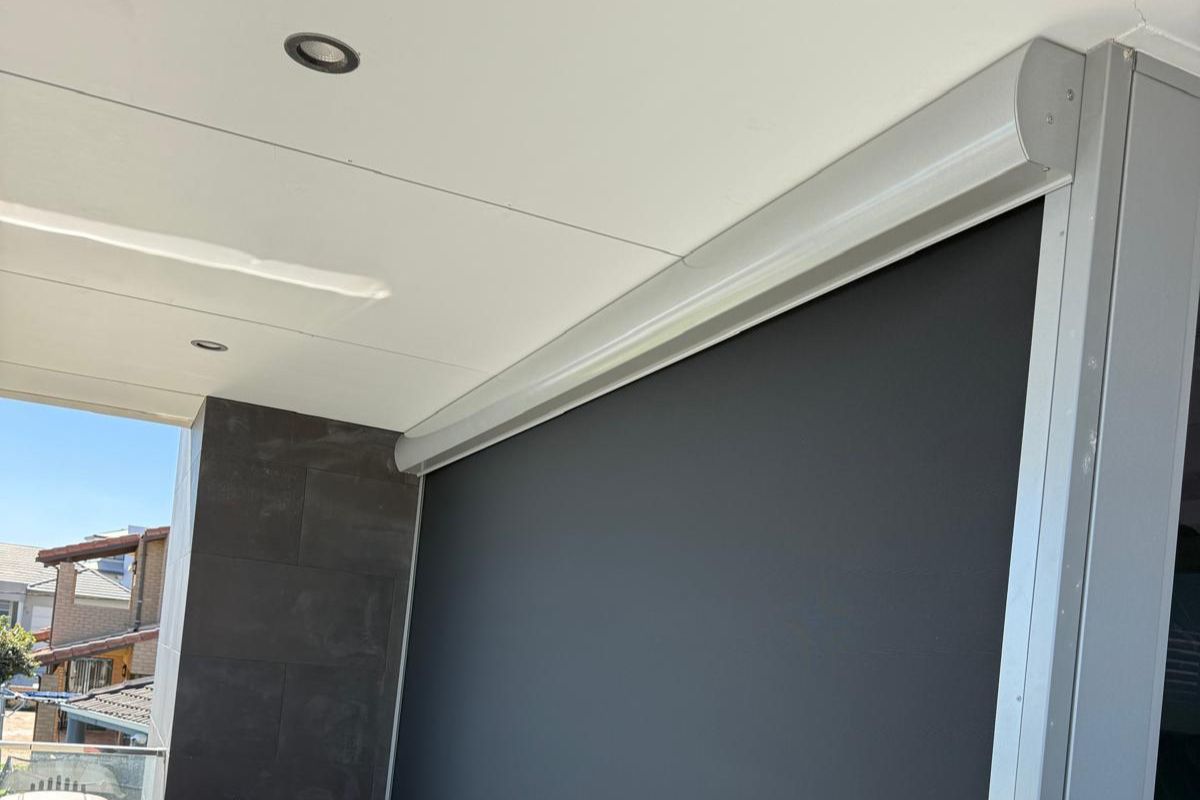
Outdoor Blinds & Awnings Buying Guide
How to choose outdoor shade that copes with Perth wind, sun and salt air.
Read Article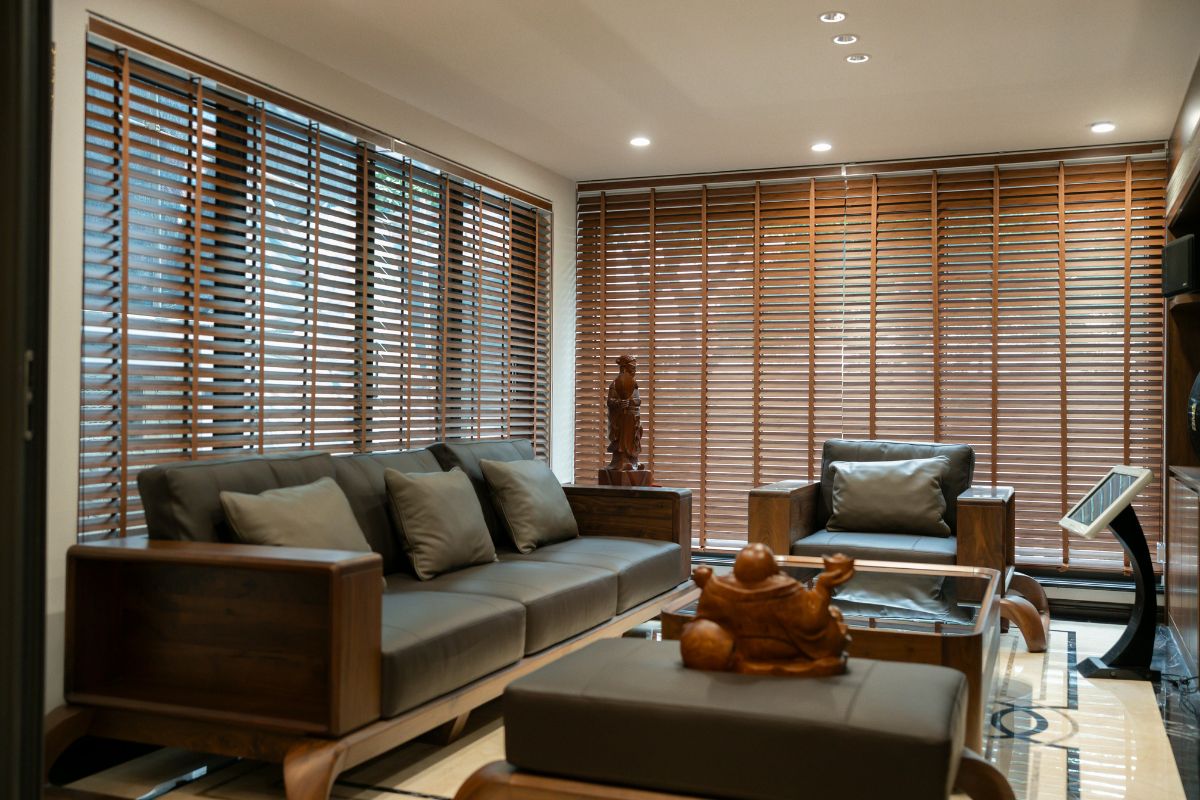 Buying Guides
How to Choose the Right Blinds for Your Perth Home
A complete room-by-room guide to blockout, roller, roman and venetian blinds.
Read Article